
Call center results depend on relevant contact data, clear messaging, focused qualification, natural conversation, and consistent measurement. A useful script gives agents structure without making them sound rehearsed, but even a strong script can underperform when the database is outdated, poorly segmented, or unrelated to the campaign goal.
For businesses working with data providers, accurate and relevant data helps agents reach the right audience, while better scripting helps them use that opportunity effectively.
Table of Contents
What Is Call Center Script Optimization?
Call Center Script Optimization is the process of improving the wording, flow, questions, responses, and next steps used during customer calls. The goal is to make conversations clearer, more relevant, and easier for agents to manage.
A script should work as a conversation framework rather than a fixed speech. Customers have different needs, priorities, levels of interest, and decision processes. Agents therefore need enough structure to stay focused while still responding naturally.
Why Scripts Affect Call Center Conversion Rates
Scripts influence call center conversion rates because they shape the first impression and guide the qualification process. A confusing opening can make a prospect end the conversation quickly. A clear opening can help the person understand why the call may matter.
A useful script should help agents:
• Explain the purpose of the call quickly
• Ask focused qualification questions
• Listen before presenting information
• Respond to common concerns
• Confirm whether the prospect fits the campaign
• End with a clear next step
Why Agents Need Flexibility
People rarely respond in the same way. Agents may need to change the order of questions, shorten an explanation, or spend more time on a concern. A flexible framework keeps the conversation natural without losing direction.

Why Call Center Scripts Fail to Convert
Poor results are not always caused by low quality leads. The problem may come from the audience, database, timing, or campaign setup.
Generic Opening Lines
A generic call opening gives the listener little reason to continue. The opening should identify the caller, explain the purpose, and establish relevance without unnecessary detail.
Talking to the Wrong Audience
Even good outbound call scripts struggle when they reach people who do not match the offer. Customer segmentation helps separate contacts by useful characteristics such as industry, location, business size, or customer type.
Poor Quality Contact Data
Outdated records can reduce contact rate and waste agent time. Strong data accuracy helps teams focus on reachable contacts and supports cleaner reporting.
Reliable call center data can support:
• Better audience targeting
• More relevant conversations
• Improved routing
• Clearer qualification
• More useful campaign analysis
Weak Qualification
Poor qualification questions can produce weak call center leads because agents may not learn whether a person fits the campaign. Questions should reveal need, timing, authority, and interest without turning the call into an interrogation.
Weak Objection Handling
Objection handling should help agents understand concerns and respond respectfully. The purpose is not to pressure the prospect. It is to decide whether the conversation should continue and what information is genuinely useful.
How Customer Data Improves Script Relevance
The quality of customer data for call centers affects how specific and useful a script can be. When the database contains relevant fields, agents can have more focused conversations.
B2B and B2C Data
B2B calling data may include industry, company type, role, location, business size, and first party and third party data. These fields can help identify decision makers and create relevant script variations.
B2C calling data may include geographic or customer profile information that helps teams group audiences for different campaigns.
Call Center Data Segmentation
Call center data segmentation makes it possible to create message variations for distinct audience groups. Useful segmentation fields may include:
• Industry
• Geographic area
• Business size
• Customer category
• Campaign source
• Previous interaction
• Product interest
• Buyer intent
This supports call center personalization while keeping the conversation appropriate.
Why One Script Should Not Be Used for Every Database
A targeted calling database built for one audience may require different messaging from a broad lead generation list. Script wording, qualification depth, and call to action should match the purpose of the data.
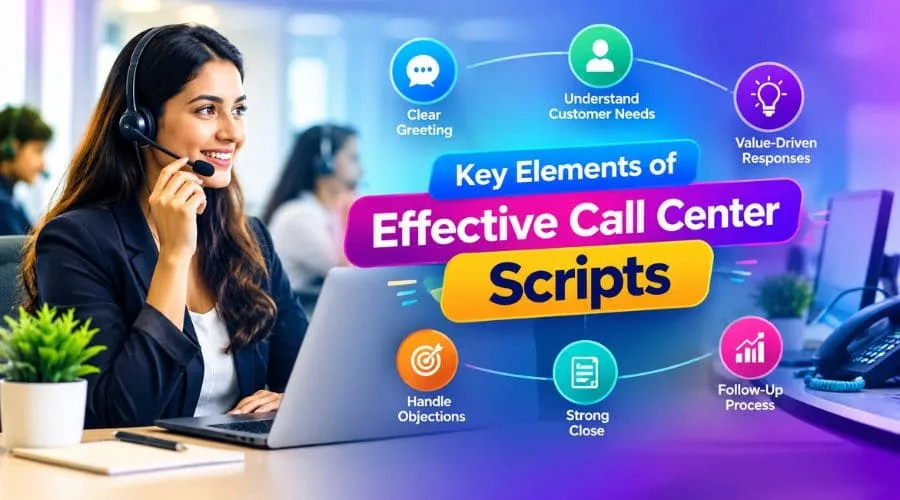
Key Elements of Effective Call Center Scripts
Effective sales call scripts are easy for agents to follow and easy for prospects to understand.
Clear Opening
The opening should be brief and explain why the call is taking place.
Relevant Qualification Questions
Lead qualification scripts should focus only on information needed to decide whether the prospect should move to the next stage.
Questions may cover:
• Current need
• Timing
• Decision authority
• Existing solution
• Purchase intent
• Preferred next step
Listening Prompts
Short prompts can encourage people to explain their needs in their own words. This improves understanding and reduces the risk of agents speaking for too long.
Natural Value Statement
The agent should connect the message to the need identified during the conversation. Long feature lists usually make the call harder to follow.
Clear Call to Action
The next step should match the prospect’s level of readiness. It may be a callback, appointment, quote request, information request, or another agreed action.
How to Avoid Sounding Scripted
Use short prompts, optional response paths, and clear conversation goals. Agents should understand why each section exists rather than memorizing every sentence.
How to Improve the First 30 Seconds of a Call
The agent should identify the caller, explain the reason for contact, and establish relevance quickly. When using outbound calling data, only information that is necessary and appropriate for the campaign should be mentioned.
Avoid Vague Sales Language
Cold calling scripts should not begin with generic claims. The prospect should understand the purpose quickly.
What Information Should Agents Avoid Mentioning?
Avoid unnecessary personal details, sensitive information, or anything that may make the recipient uncomfortable. Contact information should be used responsibly and in line with applicable privacy and communication requirements.
How to Handle Common Call Center Objections
Agents should respond calmly and avoid arguing.
I Am Not Interested
Clarify whether the issue is timing or relevance. If the person wants to end the call, respect that decision.
I Am Busy
Offer a short summary or ask for a better time.
Send Me the Information
Confirm what information would be useful and the preferred communication channel.
Why Agents Should Not Push Too Hard
The goal is to understand the concern and determine whether there is a genuine fit.
Personalizing Scripts With Customer Data
Personalization should improve relevance without becoming intrusive.
Customer Type and Industry
New prospects, returning contacts, and existing customers may need different introductions. Industry context can also make telemarketing scripts more relevant.
Previous Interaction
CRM records can prevent repeated questions and maintain continuity.
Personalization Versus Too Much Personalization
Use only the information needed for the conversation.
Script Problems and Recommended Improvements
| Script Problem | Potential Impact | Recommended Improvement | Data Related Consideration |
|---|---|---|---|
| Generic opening | Low engagement and early call exits | Start with a clear and relevant introduction | Use available audience information to improve relevance |
| Wrong audience | Low qualification and conversion rates | Refine targeting before starting the campaign | Segment contacts by industry, location, profile, or customer type |
| Outdated contact data | More failed calls and wasted agent time | Regularly review and update contact records | Check data freshness, accuracy, and reachability |
| Long introduction | Prospects may lose interest quickly | Keep the opening short and focused | Mention only information relevant to the contact |
| Weak qualification questions | Poor lead quality | Ask focused questions about need, timing, and authority | Use database fields to support better qualification |
| Same script for every audience | Conversations may feel irrelevant | Create script variations for different segments | Separate databases by audience or campaign type |
| Poor objection handling | Agents may struggle to continue useful conversations | Prepare flexible response frameworks | Track common objections by customer segment |
| Weak call to action | Prospects may not know the next step | End with one clear and appropriate action | Record call outcomes for follow up planning |
| Limited personalization | Lower relevance during conversations | Personalize only where it adds value | Use suitable customer or business information |
| No performance review | Weak script sections may remain unnoticed | Review calls, outcomes, and agent feedback regularly | Compare results across different data segments |
How to Test and Improve Scripts
Testing and AI lead scoring should focus on measurable changes rather than assumptions.
Test Openings and Qualification
Compare different openings and qualification questions while keeping the audience and campaign conditions similar. Check whether changes improve lead quality rather than simply making calls longer.
Compare Audience Segments
Different groups may respond differently to the same message. For data driven call center campaigns, teams can review script performance alongside audience characteristics.
Review Calls and Agent Feedback
Recordings and agent feedback can reveal unclear wording, repeated objections, unnecessary sections, and questions prospects regularly misunderstand.
Change One Major Element at a Time
Changing many elements together makes it difficult to know what improved or reduced performance.
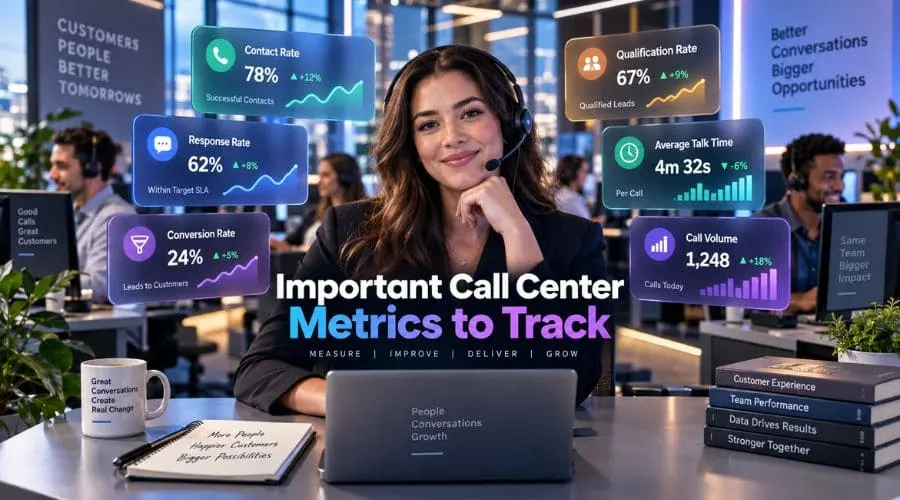
Important Call Center Metrics to Track
Call center agent performance should be outbound calling data trends measured through outcomes, not just activity.
Contact Rate
Contact rate shows how often agents reach the intended contacts.
Qualification Rate
This measures how many connected calls meet the campaign’s defined conditions.
Appointment and Sales Conversion Rate
Appointment rate shows how many suitable conversations produce a scheduled meeting. Sales conversion rate measures how many qualified interactions produce the intended sales result.
Response Rate and Calls Per Conversion
Response rate is useful when calling is part of a wider campaign. Calls per conversion shows how much activity is needed for one successful outcome.
Why Script and Data Metrics Belong Together
A poor result may come from the script, audience, database, timing, or more than one factor. Reviewing these areas together gives a clearer view of campaign performance.
Call Center Metrics and What They Reveal
| Metric | What It Measures | What a Low Result May Indicate | Possible Optimization |
|---|---|---|---|
| Contact Rate | Percentage of contacts successfully reached | Outdated or inaccurate contact information | Review database quality and contact details |
| Connection Rate | Percentage of calls connected to the intended person | Poor targeting or incorrect contact records | Refine audience selection and database validation |
| Qualification Rate | Percentage of connected prospects that meet campaign criteria | Weak targeting or ineffective qualification questions | Improve segmentation and qualification logic |
| Appointment Rate | Percentage of qualified calls resulting in appointments | Weak value communication or unclear next step | Improve script relevance and call to action |
| Conversion Rate | Percentage of qualified prospects completing the desired action | Audience mismatch, weak messaging, or poor follow up | Review targeting, script structure, and campaign process |
| Calls Per Conversion | Number of calls required to achieve one conversion | Low audience relevance or inefficient scripting | Compare results by customer segment |
| Follow Up Rate | Percentage of suitable prospects receiving required follow up | Weak CRM processes or unclear agent responsibilities | Improve follow up procedures and CRM recording |
| Database Response Rate | Percentage of contacts responding positively to the campaign | Poor data relevance or weak audience selection | Refine database filters and segmentation |
| Average Talk Time | Average duration of connected conversations | Very short calls may indicate weak openings or low relevance | Review opening statements and call recordings |
| Call Disposition Rate | Distribution of call outcomes across categories | Repeated negative outcomes may reveal targeting or script issues | Analyze outcomes by database segment and campaign type |
How Data Providers Support Better Campaign Planning
Quality calling data providers can support campaign planning by helping businesses organize contact information around defined audience criteria.
Audience Segmentation and Filtering
Segmented, filtered data can help teams create separate messaging for different industries, locations, business profiles, or customer groups while removing contacts that do not fit the campaign.
Campaign Specific Databases
Separate lists may be useful when offers, audiences, regions, or campaign objectives differ.
One Database or Multiple Campaign Databases?
One database may be suitable when the audience and purpose are closely related. Multiple campaign databases can be easier to manage when messaging, qualification rules, or reporting needs differ.
Call Center Scripting Best Practices Checklist
Before launching a campaign, review these call center scripting best practices:
• Define the target audience clearly
• Check whether contact data is current and relevant
• Match the script to the audience
• Keep the opening concise
• Use only necessary qualification questions
• Give agents flexibility
• Prepare clear objection responses
• Define the next step
• Track results by audience segment
• Review scripts regularly
These practices can help improve call center conversions without making conversations feel forced.
Frequently Asked Questions
What is call center script optimization?
It is the process of improving the structure, wording, questions, responses, and next steps used during calls. The goal is to make conversations clearer, more relevant, and easier for agents to manage.
How can I improve call center conversion rates?
Review audience quality, data accuracy, script clarity, qualification, objection responses, and the next step. Test changes carefully and compare results across audience groups.
What makes a good call center script?
A good script is concise, relevant, flexible, and easy to follow. It guides the agent without forcing every conversation into the same wording.
Should agents follow scripts word for word?
Usually no. Agents should understand the purpose of each section and use the script as a framework.
How does data quality affect call center lead conversion?
Accurate and relevant information helps agents reach the right audience and have more focused conversations. Poor records can reduce reachability and make the script less relevant.
What data is useful for telemarketing campaigns?
Useful fields may include contact details, geography, industry, business type, role, customer category, and information that directly supports the campaign goal.
Should different customer segments have different scripts?
Yes, when those groups have different needs, decision processes, or reasons for engagement. Separate script versions can make conversations more relevant.
What is the role of lead generation data?
Lead generation data helps teams identify and organize contacts that fit selected campaign criteria. Its usefulness depends on relevance, freshness, accuracy, and responsible use.
How can telemarketing data support script planning?
Telemarketing data can help teams group contacts by audience characteristics so messaging and qualification can be adjusted for each group.
How often should scripts be updated?
Review them when campaign results change, new objections appear, audience groups change, or agents identify repeated communication problems.
Final Thoughts
Better results come explore more lead generation insights from connecting the right audience with the right conversation. Script quality should work together with data quality, segmentation, agent communication, and measurement.
A reliable contact database, relevant audience groups, clear qualification logic, responsible personalization, and consistent review give calling teams a stronger foundation for useful conversations and sustainable campaign improvement.