
A successful outbound conversation depends on more than the words an agent reads. The quality of the data, the relevance of the audience, the timing of the call, the questions asked, and the next step all influence the result. For BPO teams and data provider businesses, this connection matters because even a well written script can perform poorly when agents are calling outdated or irrelevant contacts.
Call center script optimization works best when teams treat the script as a flexible conversation guide rather than a fixed speech. Agents need structure, but they also need enough freedom to listen and respond naturally. Accurate contact information and clear audience segments make that flexibility more useful because the agent has better context before the conversation begins.
This guide explains how to improve call center scripts while keeping data quality, segmentation, and lead relevance at the center of the process.
Table of Contents
What Is a Call Center Script?
A call center script is a structured guide that helps an agent introduce the purpose of a call, ask useful questions, qualify the contact, explain relevance, answer objections, and suggest an appropriate next step.
A modern call center sales script should support natural conversation rather than make every agent sound identical. A useful structure normally includes:
• A short opening
• A clear reason for the call
• Discovery questions
• Qualification questions
• A concise value statement
• Objection responses
• A suitable call to action
• A professional closing
A sales call script gives agents direction, while coaching helps them listen and adapt.

Why Script Quality and Calling Data Must Work Together
Many outbound teams review their script first when results are weak. That can be useful, but the script may not be the main issue.
If agents receive incorrect phone numbers, duplicate records, outdated job roles, outdated or poorly matched leads, or contacts outside the target audience, the campaign will struggle before the conversation starts. This is why the relationship between a calling data provider and the calling team deserves attention.
Reliable verified calling data can reduce wasted dialing and give agents useful context. A call center data provider may supply location, business category, company size, customer type, or job role data for more relevant conversation paths.
Poor data can create several problems:
• Low contact rates
• Weak qualification rates
• Repeated calls to unsuitable contacts
• Generic conversations
• Inaccurate campaign analysis
• More agent time spent correcting records
The same applies to call center leads and BPO leads. A large list has limited value when contacts do not match campaign criteria.
How Lead Quality Affects the Conversation
Lead quality influences how often agents reach people who fit the intended audience. Better audience fit does not guarantee a conversion, but it gives the script a fairer chance to work.
A BPO lead provider should be evaluated on relevance, freshness, coverage, and segmentation options. A BPO data provider with useful campaign fields can help teams separate audiences before dialing.
Contact Accuracy
Correct names and phone details help the agent start the conversation professionally and reduce avoidable dialing attempts.
Geographic Information
Location can affect service availability, calling hours, language, and regional eligibility. Geographic context also helps teams avoid presenting an offer where it does not apply.
Business and Consumer Attributes
A B2B database provider may include company sector, role, size, location, or buyer intent data to help identify prospects showing relevant interest. A B2C database provider may focus on consumer attributes that are relevant and permitted for the campaign.
Segmentation Fields
Data segmentation allows teams to group contacts by meaningful characteristics. This makes it easier to prepare different openings, questions, and calls to action.
| Metric | What It Shows | What to Investigate | Possible Script/Data Action |
|---|---|---|---|
| Conversion Rate | Percentage completing desired action | Script effectiveness and lead quality | Test scripts by data segment |
| Contact Rate | Reachable prospects | Accuracy of calling database | Review data quality |
| Qualification Rate | Relevant prospects reached | Targeting accuracy | Refine segmentation |
| Average Call Duration | Conversation efficiency | Script length and engagement | Remove unnecessary sections |
| Objection Rate | Common resistance | Messaging or targeting issues | Improve objection handling |
| Appointment Rate | Successful next steps | CTA effectiveness | Test closing variations |
Key Elements of an Effective Call Center Script
The script structure should be simple enough to use comfortably while creating consistency.
Start With a Natural Opening
The opening should identify the caller and explain the reason for contact in plain language. Avoid long introductions. The first few seconds should help the recipient understand why the call is happening.
Use a Permission Based Transition
A brief permission based question respects the person’s time and gives the agent a natural way to continue.
Ask Relevant Discovery Questions
Discovery questions help the agent understand the current situation. They should connect with the campaign objective rather than filling time.
Define Lead Qualification Clearly
Lead qualification should be based on agreed criteria. Agents need to know what makes a contact suitable and what information must be confirmed before moving forward.
Explain Value in Simple Language
The value statement should connect with what the agent has learned. It should be concise and relevant to the prospect rather than a long prepared pitch.
Prepare for Common Objections
Repeated objections can reveal issues in the message, target audience, offer, or database quality.
End With a Clear Next Step
The call to action should fit the prospect’s readiness. A follow up, appointment, information request, or polite close may all be valid outcomes.
How to Optimize Call Center Scripts for Higher Conversion Rates
Improvement works best with a repeatable process.
Step 1: Define the Campaign Goal
Decide what the call should accomplish. The goal may be qualification, appointment setting, interest confirmation, or another measurable action.
Step 2: Review the Audience
Confirm who should receive the call and why that audience is relevant. This step helps prevent a generic outbound call script.
Step 3: Segment the Database
A segmented calling database can separate contacts by location, industry, role, customer type, company size, or engagement stage.
Step 4: Match the Script to Each Segment
Targeted quality calling data provider helps teams choose more suitable openings and questions. Different groups may respond to different concerns, so a single script should not be forced across every audience.
Step 5: Improve Qualification Questions
Questions should confirm relevance without making the call feel like an interview.
Step 6: Build Flexible Objection Paths
An objection path should guide the agent rather than provide a long response to memorize.
Step 7: Test One Change at a Time
Compare openings, qualification questions, objection responses, and closing language across similar groups. Change one main element at a time.
Step 8: Review Results With Data Quality
A call center conversion rate should be reviewed alongside contact rate, qualification rate, appointment rate, and database accuracy. This helps teams separate script issues from targeting or data problems.
Call Center Script Elements and Useful Data
| Script Element | Purpose | Useful Data | Example Application |
| Opening | Gain attention | Name, location, industry | Adapt introduction to prospect context |
| Qualification | Identify relevance | Job role, company size, demographics | Ask segment-specific questions |
| Value Proposition | Explain relevance | Industry, interests, previous activity | Focus on applicable benefits |
| Objection Handling | Address hesitation | Lead source, previous response | Select relevant objection path |
| CTA | Move prospect forward | Lead stage, engagement level | Adjust next action |
How Data Providers Support Better Script Personalization
Data providers support script performance by giving teams useful audience information before dialing.
Outbound calling data can support segmentation by geography, business category, role, or other relevant fields. Telemarketing data can serve a similar purpose when the records match the campaign criteria.
A customer database should also be reviewed for accuracy and relevance before agents begin calling. Teams that use a telecalling database should check how recently records were updated and which fields are available.
What to Review Before Buying Calling Data
• Data freshness
• Validation process
• Available fields
• Geographic coverage
• Segmentation options
• Duplicate handling
• Source information
• Relevance to the campaign
A lead data provider should explain what the dataset contains and how it can be filtered. Buyers should define the audience before choosing a broad list.
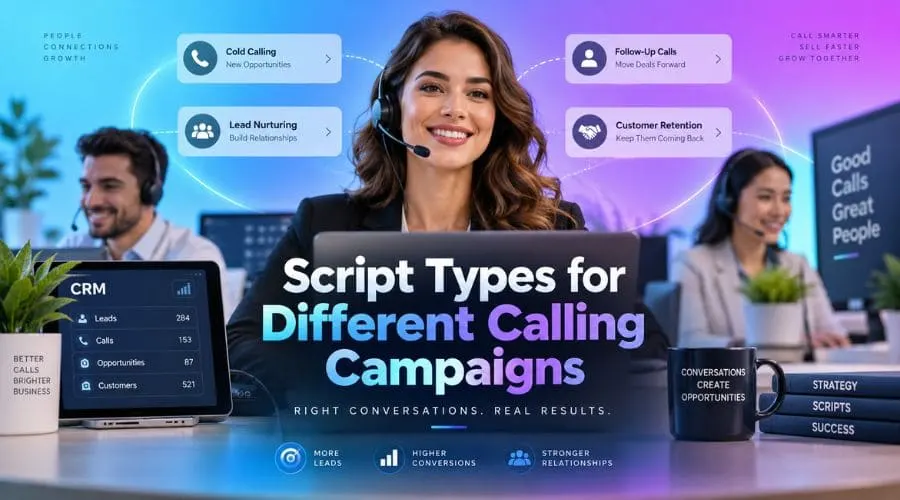
Script Types for Different Calling Campaigns
Different campaign goals require different structures.
Cold Calling
A cold calling script should start briefly, explain the reason for contact, and give the recipient room to continue or decline.
Telemarketing
A telemarketing script should connect the opening, qualification questions, and call to action with the selected audience. The agent should avoid reading long blocks of text.
Outbound Sales
An outbound sales script may serve cold prospects, warm leads, previous inquiries, or existing customers. Its wording should reflect that stage.
Appointment Setting
Appointment calls should confirm relevance before asking for time. Outbound sales leads should match the campaign audience and qualification criteria.
Follow Up Calls
Follow up calls should acknowledge earlier contact only when that information is accurate and permitted.
For teams looking for call center script examples, structure and context matter more than copied wording.
Common Script Mistakes That Can Reduce Results
Several issues appear repeatedly in outbound calling programs:
• Reading every sentence word for word
• Using one script for every segment
• Talking too much before asking a question
• Asking irrelevant questions
• Ignoring available customer information
• Using unclear qualification rules
• Pushing the same call to action on every prospect
• Reviewing agents without reviewing the data source
• Keeping old wording after the audience changes
A weak cold calling script can reduce engagement, but inaccurate data can produce similar symptoms. Both areas should be reviewed before decisions are made.
Metrics for Measuring Script Performance
No single metric explains the whole campaign. Low contact or qualification rates may point to database or targeting problems, while appointment results can also reflect script, timing, offer, or audience fit.
How Often Should Scripts Be Updated?
Review scripts when the audience, campaign goal, offer, regulation, objections, available data, or performance patterns change.
Teams can check:
• Where calls end early
• Which questions create confusion
• Which objections appear often
• Whether different segments respond differently
• Whether the available data supports the current script
The goal is informed adjustment based on campaign evidence.
Frequently Asked Questions
What is a call center script?
It is a structured conversation guide that helps agents handle openings, discovery, qualification, objections, next steps, and closing. It gives agents direction while allowing room for natural conversation.
How can a call center improve conversion rates?
Review the script, audience fit, calling data, agent coaching, qualification criteria, timing, and follow up process together. Looking at these factors as a connected system makes it easier to identify where performance is being lost.
What should an outbound call script include?
It should include a concise introduction, clear reason for contact, discovery questions, qualification questions, a relevant value statement, objection guidance, and a suitable next step.
How does calling data affect script performance?
Calling data affects who agents reach and how much useful context they have. Accurate and relevant records can support better personalization and qualification, while poor records can reduce contact quality.
Why is segmentation important for outbound calling?
Segmentation groups contacts by useful characteristics such as location, industry, role, company size, or engagement stage. Agents can then use conversation paths that are more relevant to each group.
What should businesses check in a calling database?
They should review freshness, validation, available fields, geographic coverage, duplicate handling, source information, segmentation options, and relevance to the intended campaign.
Should agents read scripts word for word?
Usually not. Required disclosures and approved statements may need exact wording, but the rest of the conversation should allow agents to listen and respond naturally.
How often should an outbound sales script be updated?
Review it when the audience, campaign objective, offer, regulations, common objections, or performance patterns change. Updates should be based on real campaign information rather than routine rewriting.
Final Takeaway
Better outbound results usually depend on data quality, audience selection, script structure, qualification, agent skill, and measurement.
For businesses in the data provider industry, the database is part of the conversation. Accurate records and useful segmentation give agents better context for natural, consistent calls.
Whether a team is working with outbound calling data, call center leads, a customer database, or a targeted prospect list, the objective should remain the same: reach the right audience, ask relevant questions, respect the recipient, and measure what happens after each call.
Reviewing script and data decisions together gives teams a clearer view of campaign performance.