
Lead generation depends on data. Without the right data, it becomes harder to reach the right audience, qualify intent, and turn interest into inquiries or sales. Businesses that want better lead quality, stronger targeting, and more relevant communication need to understand where their data comes from and how it supports their goals.
When comparing first party data and third party data in lead generation, the difference is more than a technical detail. It affects audience accuracy, privacy compliance, campaign performance, personalization, and long term growth. As search engines, AI driven discovery tools, and voice search systems place greater value on relevance and trust, the quality of your lead generation data matters more than ever.
First-party data comes directly from your own audience. Third-party data comes from outside providers. Both can support lead generation, but they do not serve the same purpose. One gives you better control, deeper insight, and stronger relationship building. The other can expand reach and support prospecting when used carefully.
This guide explains first party data vs third party data in lead generation in a clear and practical way. It covers benefits, limitations, strategy, and best practices so you can choose a smarter path for growth.
Table of Contents
What Is First Party Data in Lead Generation
First-party data is information your business collects directly from people who interact with your brand. This is your own data, gathered through your website, forms, email signups, purchases, chat requests, surveys, and CRM activity.
First-party data often includes:
• Contact form submissions
• Newsletter subscriptions
• Webinar registrations
• Download requests
• Service inquiries
• CRM records
• Purchase behavior
• Website engagement signals
Because this data comes from direct interaction, it is usually more accurate and more relevant to your business goals. It reflects real interest from people who already know your brand or are actively exploring your offer.
First party data also gives you stronger control over how information is collected, stored, segmented, and used. That makes it valuable for businesses that want better lead generation quality and better long term marketing performance.
What Is Third Party Data in Lead Generation
Third party data is information collected by external companies and then sold, shared, or licensed to businesses for targeting and prospecting. This type of data is not collected directly through your own brand touchpoints.
In lead generation, third party data may include:
• Purchased contact lists
• Industry based audience segments
• Demographic datasets
• Interest based profiles
• Company level prospect records
• Market expansion databases
Businesses often use third party data to reach broader audiences, enter new markets, or identify possible leads outside their current network. It can offer scale, but it also comes with challenges related to relevance, accuracy, consent, and engagement quality.
Third party data can support lead generation, but it usually requires stronger validation. If the data is outdated or poorly matched to your audience, it can reduce campaign efficiency and lead quality.
First Party Data vs Third Party Data in Lead Generation
Understanding the difference between first party data and third party data helps businesses make better decisions about where to invest time and budget.
Key Differences
This comparison shows why first party data often becomes the foundation of a strong lead generation strategy, while third party data works better as a support layer.
| Factor | First Party Data | Third Party Data |
|---|---|---|
| Source | Collected directly from your audience | Collected by external providers |
| Data Ownership | Fully owned by the business | Not owned by the business |
| Accuracy | Usually more accurate | Can vary in quality |
| Lead Intent | Higher intent | Lower or mixed intent |
| Personalization | Strong | Limited unless enriched |
| Privacy Control | Better control over consent | Higher compliance risk |
| Cost | Lower over time | Often requires ongoing investment |
| Scalability | Slower to build | Faster to access |
| Lead Quality | Usually higher | Often needs verification |
| Best Use Case | Long term lead generation growth | Audience expansion and prospecting |
Why First Party Data Matters More in Modern Lead Generation
First party data has become more valuable because businesses need reliable information they can trust. Search engines and AI search systems reward content and brands that show relevance, credibility, and user alignment. In the same way, lead generation performs better when it is based on real audience signals.
First party data supports this in several ways.
Better Relevance
People who submit forms, subscribe to updates, or request details are already showing intent. That makes your messaging more aligned with their needs.
Better Personalization
When you know how people interact with your pages, offers, and content, you can create more relevant follow up communication.
Better Trust
Since the data comes from direct engagement, it supports a more transparent and permission based approach.
Better Long Term Value
Your first party data becomes a business asset. It grows as your audience grows and becomes more useful over time.
For lead generation, this means better targeting, improved conversion potential, and stronger relationship building.
When Third Party Data Can Still Support Lead Generation
Third party data is not without value. It can help when your business wants to expand visibility, explore new audience groups, or support outbound prospecting. The key is to use it with care and not depend on it as the only source of lead generation data.
Third party data may help with:
• Entering a new market
• Reaching audiences beyond your current database
• Supporting early stage prospect discovery
• Expanding account based targeting
• Enriching existing internal records
It is most useful when paired with clear qualification steps. Instead of treating every external contact as a high value lead, businesses should verify fit, validate intent, and move qualified prospects into a first party data journey.
Benefits of First Party Data for Lead Generation
First party data supports sustainable lead generation because it is rooted in real user engagement. The benefits go far beyond simple data collection.
Higher Lead Quality
Leads generated through direct interaction usually show clearer interest. This helps improve conversion focused communication.
Stronger Audience Segmentation
You can organize leads based on behavior, interest, intent level, content interaction, and stage in the buying process.
Better Conversion Potential
Because messaging is more relevant, response rates can improve and the path from inquiry to action becomes smoother.
More Accurate Insight
You learn what your audience responds to, what pages attract interest, and what offers support lead generation best.
Better Compliance Support
First party data collection is easier to manage in a privacy aware environment when consent is clear and properly documented.
Benefits of Third Party Data for Lead Generation
Third party data can still provide value when used as part of a wider strategy.
Faster Audience Access
It can help businesses reach broader pools of contacts without waiting to build every audience from scratch.
Broader Market Reach
It supports exploration in categories, industries, or regions where internal data is still limited.
Useful for Prospect Discovery
For businesses seeking new lead sources, third party datasets can help identify possible opportunities.
Helpful for Data Enrichment
When matched properly, third party data can add firmographic or demographic details to existing records.
Challenges of First Party Data in Lead Generation
Even though first party data is powerful, it requires planning and patience.
It Takes Time to Build
A strong first party data system grows through consistent traffic, content, forms, offers, and conversion focused user experience.
It Depends on User Engagement
If your content, landing pages, or offers do not motivate action, data collection will remain limited.
It Requires Ongoing Optimization
Forms, pages, call to action sections, and lead capture paths need regular improvement to support lead acquisition growth.
Challenges of Third Party Data in Lead Generation
Third party data often appears convenient, but it carries important risks.
Data Quality Can Be Weak
Records may be outdated, incomplete, or mismatched with your actual target audience.
Intent Is Often Unclear
A person listed in an external dataset may not be actively looking for your solution.
Privacy Concerns Need Attention
Businesses must assess whether the data source follows proper standards and whether outreach practices align with current rules.
Lower Engagement Is Common
Because the connection is indirect, response quality may be lower than what you see from first party leads.
Best Data Strategy for Lead Generation
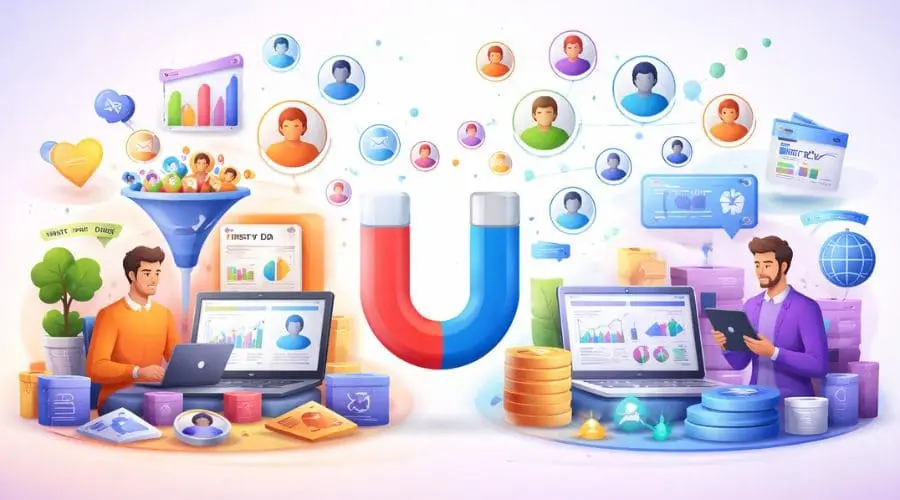
The strongest lead generation strategy does not rely on one source alone without context. It uses first party data as the core and third party data as a secondary support method.
A Practical Approach
• Build your main lead generation system around first party data
• Use third party data for research, enrichment, and expansion
• Validate outside records before using them in campaigns
• Move qualified prospects into owned channels such as forms, email, or CRM workflows
• Focus on relevance, permission, and quality at every stage
This approach helps you balance growth with trust and scale with precision.
How to Build a Strong First Party Data Strategy for Lead Generation
A first party data strategy should be designed around real user value. People share information when they see a clear reason to do so.
Core Steps
• Create useful landing pages with clear conversion paths
• Offer relevant downloadable resources
• Use newsletter signup forms with clear value
• Add inquiry forms to service pages
• Track behavior on key pages
• Organize leads in a CRM
• Use surveys and preference forms to gather deeper insight
• Improve page content for search intent and voice search questions
What Makes This Effective
When your content answers real questions and your forms appear at the right moment, lead acquisition improves naturally. This also supports SEO, GEO, AEO, and voice search because your content becomes more aligned with real user intent.
How to Use Third Party Data Safely in Lead Generation
If you use third party data, the goal should be better targeting support, not blind volume.
Smart Usage Guidelines
• Choose trusted data providers
• Review privacy and consent practices
• Check freshness and relevance before outreach
• Match external records with your ideal audience profile
• Use outside data to support research and enrichment
• Avoid depending only on purchased lists for qualified inquiries
This reduces waste and helps protect campaign quality.
Which Is Better for Lead Generation
For most businesses, first party data is better for lead generation because it offers stronger intent signals, better relevance, more accurate segmentation, and better long term value. It is more aligned with relationship based marketing and more useful in a privacy focused digital environment.
Third party data can still help when you need broader reach or market expansion, but it performs best when it supports a first party data system rather than replacing it.
Simple Answer
If your goal is better lead quality, stronger trust, and better conversion performance, first party data should lead your strategy.
Benefits and Strategy Table
| Section | First Party Data | Third Party Data |
|---|---|---|
| Benefits | Better lead quality, stronger trust, improved personalization, better conversions | Larger reach, faster audience access, useful for expansion, market discovery |
| Strategy | Build forms, landing pages, gated content, CRM flows, webinars, email capture | Use verified vendors, enrich internal records, validate contacts, support prospecting campaigns |
Future of Lead Generation Data
Lead generation is moving toward data quality, consent, and contextual relevance. As privacy expectations rise and search behavior changes, businesses need more dependable sources of information.
First party data is becoming central because it reflects direct audience relationships. It supports stronger SEO content targeting, clearer AEO structure, more relevant GEO signals, and better voice search alignment. When people ask direct questions through search or voice assistants, businesses with clearer content and stronger audience data are better positioned to respond effectively.
Third party data will still exist, but its role will continue to narrow toward support, enrichment, and expansion rather than primary decision making.
FAQ
Q:What is first party data in lead generation?
Ans: First party data in lead generation is the information your business collects directly from users through forms, signups, inquiries, purchases, and website interactions.
Q:What is third party data in lead generation?
Ans: Third party data in lead generation is information collected by outside providers and made available to businesses for targeting, prospecting, or audience expansion.
Q:Which is better for lead generation first party data or third party data?
Ans: First party data is usually better for lead generation because it is more accurate, more relevant, and more useful for personalization and conversion.
Q:Can third party data still help with lead generation?
Ans: Yes, third party data can help with lead generation when used for prospect discovery, market expansion, or data enrichment, but it should be validated carefully.
Q:How can businesses collect first party data for lead generation?
Ans: Businesses can collect first party data through contact forms, newsletter signups, gated content, service inquiries, surveys, chat tools, webinars, and CRM systems.
Q:Why is first party data important for SEO, GEO, AEO, and voice search?
Ans: First party data helps businesses understand audience intent more clearly. This supports better content targeting, clearer answers, improved personalization, and stronger alignment with search and voice based discovery.
Conclusion
The comparison between first party data and third party data in lead capture shows a clear direction. Businesses that want stronger lead quality, better targeting, and more dependable long term results should build around first party data. It offers better control, better relevance, and better value over time.
Third party data can still play a useful role, especially for broader reach and support research, but it works best when paired with a strong first party data strategy. When you focus on accuracy, consent, audience understanding, and useful content, your customer acquisition becomes more effective across traditional search, AI search tools, and voice search platforms.
If you want to rank well and attract better leads, build your customer acquisition strategy on data you can trust.