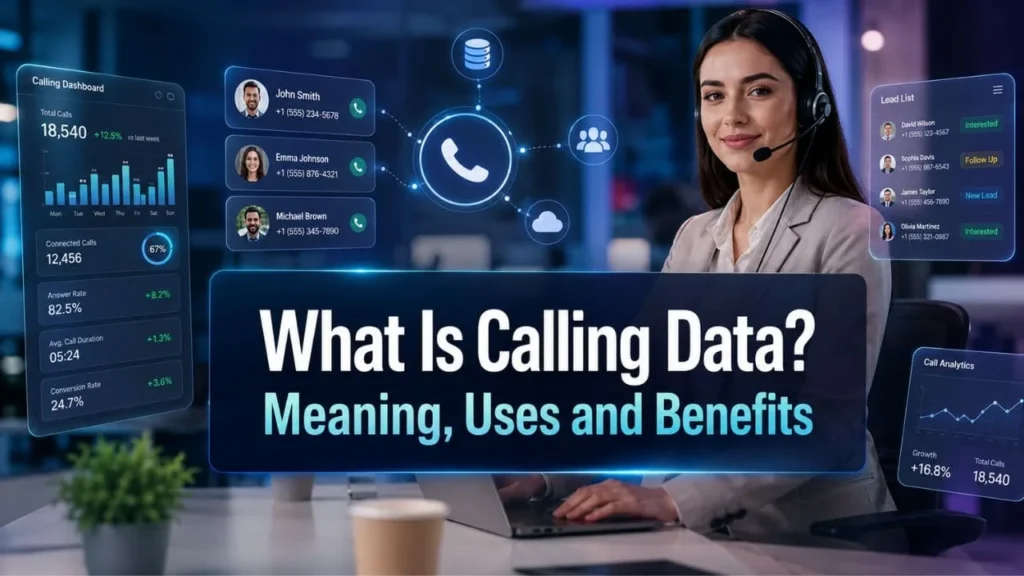
Calling data is one of the most useful resources for businesses that depend on phone-based outreach, sales calls, telecalling, customer support, appointment setting, and lead generation. When used correctly, it helps teams connect with the right people, reduce wasted calling effort, and improve the quality of business conversations.
For the data provider industry, lead generation data is more than a list of phone numbers. It is a structured contact database that may include names, mobile numbers, business phone numbers, company details, location, industry, job role, and other useful information. A trusted call center leads provider organizes this information so businesses can reach relevant prospects with better planning.
In simple words, lead generation data helps you know whom to call, why to call, and how to approach the conversation with better context. This makes it valuable for B2B sales, telemarketing, customer research, lead generation, and business development.
Table of Contents
What Is Calling Data?
Data means a collection of contact details that businesses use for phone-based communication. It usually includes phone numbers along with related information that helps identify the person, business, or customer segment.
A lead generation data can include:
• Name of the contact
• Mobile number or business phone number
• Company name
• Job title or department
• City, state, or region
• Industry type
• Business category
• Email address where available
• Lead source or segment
• Customer interest category
When someone searches for what is called data, they usually want to understand how this information is used in sales and marketing. In the data provider industry, data is created, cleaned, categorized, and verified so businesses can use it for meaningful outreach.
| Data Field | Meaning | Why It Matters |
|---|---|---|
| Name | Contact or business name | Helps personalize calls |
| Phone Number | Mobile or landline number | Used for direct calling |
| Location | City, state, or region | Helps with local targeting |
| Business Category | Industry or niche | Helps segment prospects |
| Company Name | Business identity | Useful for B2B outreach |
| Job Title | Role of the contact person | Helps reach decision makers |
| Email Address | Additional contact method | Supports multi channel outreach |
| Data Source Type | Source category | Helps judge reliability |
Lead Generation Data Meaning in the Data Provider Industry
In the data provider industry, data refers to verified and organized contact information that can support direct calling campaigns. It helps businesses reach prospects, customers, dealers, vendors, or decision makers through phone communication.
A data provider does not simply offer random numbers. The role of a calling data provider is to collect, refine, validate, and segment contact records so users can get better calling results.
Why Data Providers Focus on Lead Generation Data Quality
Data quality matters because poor data wastes time. If the numbers are incorrect, inactive, repeated, or irrelevant, the calling team spends more time fixing errors than speaking with real prospects.
Good quality calling data helps businesses:
• Reach more valid contacts
• Reduce wrong number calls
• Improve campaign planning
• Save time for sales teams
• Connect with relevant audiences
• Build more organized outreach lists
Accuracy Creates Better Calling Outcomes
A verified phone number database gives calling teams a better chance of reaching the right person. This is why businesses prefer updated and segmented lead generation data from reliable data providers.
What Information Does Calling Data Usually Include?
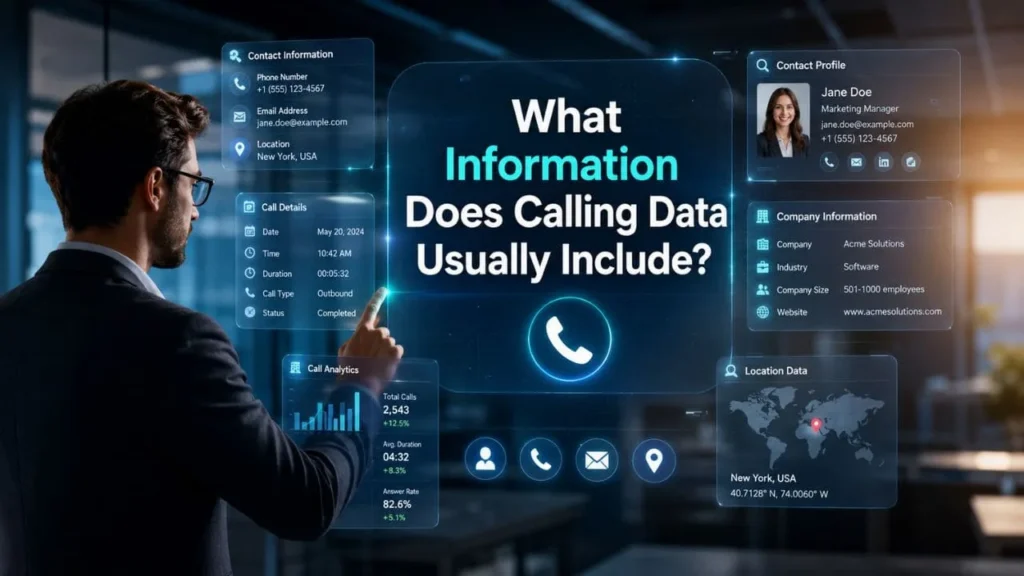
Data can vary depending on the business goal, industry, audience type, and data provider. Some businesses only need phone numbers, while others need complete B2B contact data with company details and decision-maker information.
Common Fields in a Call Center Leads
A well-organized lead generation data may include:
• Contact name
• Phone number
• Company name
• Business type
• City and state
• Industry category
• Job role
• Email address
• Company size
• Lead category
• Customer type
• Last updated date
Basic Calling Data
Basic Data usually includes name, phone number, and location. It is useful for simple telecalling campaigns where the main goal is direct communication.
Advanced Calling Data
Advanced lead generation data includes deeper business details such as industry, designation, company size, purchase intent, and customer segment. This type of data is useful for B2B sales, account-based outreach, and lead generation.
Types of Call Center Leads
Different businesses need different types of Call Center Data. A local service company may need city based lead generation data, while companies targeting other businesses may need B2B calling data with industry specific contact details. The right type depends on the outreach goal.
How Calling Data Is Collected and Organized
Call Center Data is collected from different lawful and business-relevant sources, depending on the market, purpose, and data policy. A responsible data provider follows clear processes to collect, clean, and organize the data before it is shared with clients.
Common Data Organization Methods
Data providers usually organize call center data by:
• Industry
• Location
• Business category
• Customer type
• Company size
• Contact role
• Product interest
• Service need
• Outreach purpose
Segmentation Makes Call Center Data More Useful
Segmentation is important because every business does not need the same audience. A software company may need IT decision makers, while a financial service provider may need business owners. When lead generation data is segmented properly, the final list becomes more relevant.
How Data Providers Verify Call Center Leads
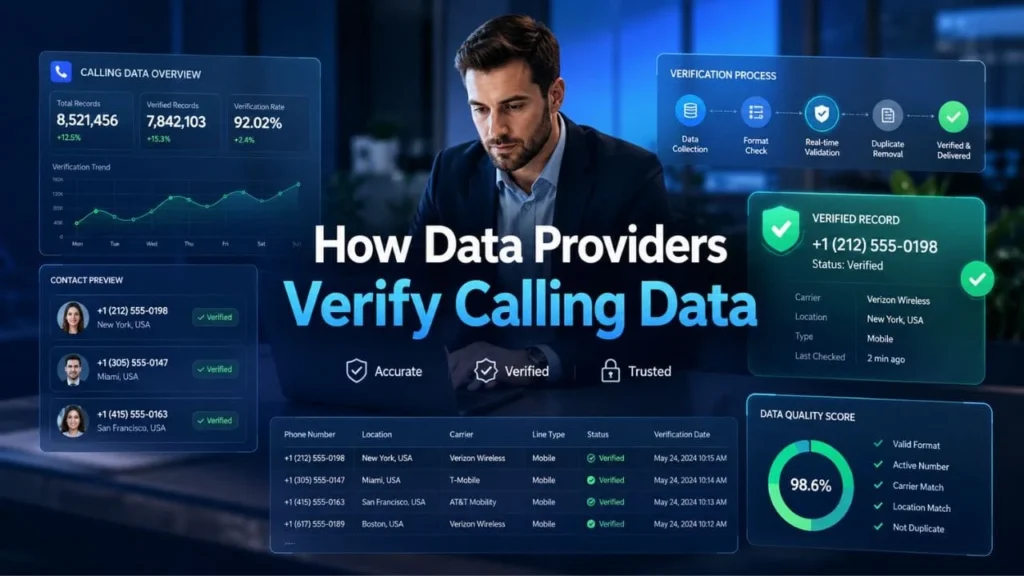
Verification is one of the most important parts of the data provider process. Without verification, lead generation data may contain inactive numbers, repeated contacts, wrong entries, and outdated details.
Common Verification Steps
A data provider may use several checks to improve data quality:
• Removing duplicate records
• Checking number format
• Validating location details
• Updating outdated records
• Matching contact information with business categories
• Removing incomplete entries
• Reviewing invalid or inactive numbers
• Organizing records into useful segments
Why Verification Matters
Verified lead generation data gives sales and marketing teams a cleaner starting point. It helps them focus on real conversations rather than correcting poor records. This is why businesses often prefer verified call center data over random contact lists.
| Use Case | How Calling Data Helps | Best For |
|---|---|---|
| Telecalling | Helps teams reach prospects directly | Sales teams |
| Lead Generation | Finds potential buyers faster | B2B companies |
| Market Research | Collects customer opinions and demand signals | Research teams |
| Customer Follow Up | Supports repeat communication | Service businesses |
| Event Promotion | Helps invite targeted audiences | Event companies |
| Product Launch Outreach | Builds awareness among selected prospects | Growing brands |
| Local Business Promotion | Connects with people in a selected city or area | Local businesses |
| Dealer or Distributor Search | Helps identify potential channel partners | Manufacturers |
Main Uses of Lead Generation Data for Businesses
Calling leads supports many business functions. Sales teams, marketing teams, research teams, support teams, and business development teams use outbound calling data to reach relevant contacts, manage communication, and improve outreach planning.
Lead Generation
Call center data helps businesses identify possible leads and start direct conversations. For B2B companies, a good B2B calling database can make outreach more focused and practical.
Telecalling Campaigns
Telecalling teams use call center data to contact prospects, explain services, answer questions, and collect responses. When the database is well organized, callers can manage conversations with better clarity.
Sales Outreach
Sales teams use business calling leads to reach decision makers, introduce products or services, and book meetings. A verified contact database can reduce wasted effort and improve calling efficiency.
Customer Follow-Up
Businesses can use Calling leads for follow up calls after inquiries, service requests, form submissions, or previous communication. This helps maintain contact with interested users.
Market Research
Calling leads can also support research. Businesses may use phone-based surveys to understand customer needs, demand levels, pricing views, and market feedback.
Dealer and Vendor Communication
Many companies need lead generation data to connect with dealers, distributors, suppliers, vendors, or business partners. Data providers can organize such records by industry and location.
Key Benefits of Verified Call Center Leads
Verified calling data gives businesses a better base for outreach. It improves contact quality, saves time, and supports better sales planning.
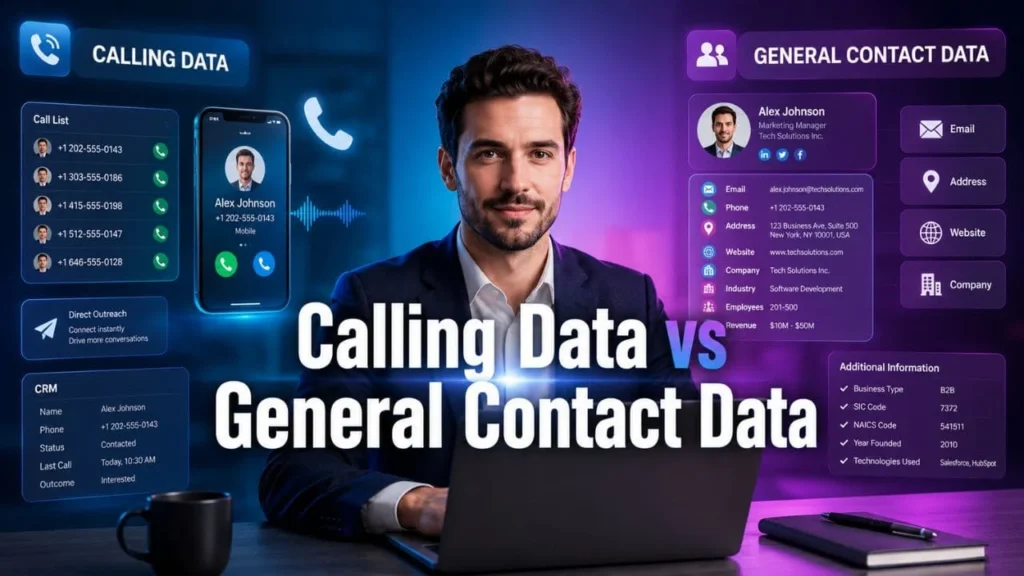
Calling Data vs General Contact Data
Calling leads and general contact data are related, but they are not always the same. General contact data may include email, address, website, social profile, or company details. Calling leads focuses mainly on phone-based communication.
Calling Data
Calling leads is mainly used for phone calls. It places more importance on phone number accuracy, contact name, location, and calling relevance.
General Contact Data
General contact data can support many communication channels, such as email, postal contact, social outreach, and business research.
Main Difference
The main difference is purpose. Calling leads is built for direct phone outreach, while general contact data may support wider communication needs.
Why Data Accuracy Matters in Calling Data
Data accuracy is very important when using lead generation data. A small error in a phone number can stop a business from reaching a valid prospect. Outdated records can also affect campaign results.
Problems Caused by Poor Lead Generation Data
Low-quality Calling leads can create several issues:
• More wrong number calls
• More repeated contacts
• Lower caller productivity
• Poor campaign reporting
• Lower trust in the database
• More time spent on manual checking
• Reduced lead quality
Clean Data Builds Better Outreach
When the data is clean, verified, and properly segmented, the outreach process becomes smoother. Callers can focus on the conversation instead of dealing with data errors.
Compliance, Consent, and Responsible Data Usage
Calling leads must be used responsibly. Businesses should respect privacy rules, consent requirements, and calling preferences. A good data provider should also encourage lawful and ethical use of contact data.
Responsible Use of Calling Data
Businesses should:
• Use calling leads for lawful business purposes
• Respect customer privacy
• Avoid repeated unwanted calls
• Maintain proper opt-out processes
• Follow local telecom and privacy rules
• Check calling restrictions where required
• Keep data secure
• Avoid sharing data without proper permission
Why Compliance Matters
Responsible use protects both the business and the customer. It also helps maintain trust in the data provider industry. Calling leads should support useful communication, not unwanted or careless outreach.
How to Choose the Right Calling Data Provider
Choosing the right calling leads provider can make a major difference in outreach quality. A provider should be able to explain how the data is organized, what fields are included, how often records are updated, and how verification is handled.
Things to Check Before Buying Telecalling Data
Before choosing a calling leads provider, check:
• Data source clarity
• Verification process
• Update frequency
• Industry segmentation
• Location coverage
• Sample data quality
• Duplicate control
• Available contact fields
• Support for custom audience needs
• Compliance awareness
Ask About Data Relevance
You should not only ask how many numbers are available. You should ask how relevant the lead generation data is for your business goal. A smaller verified database can be more useful than a large list with poor accuracy.
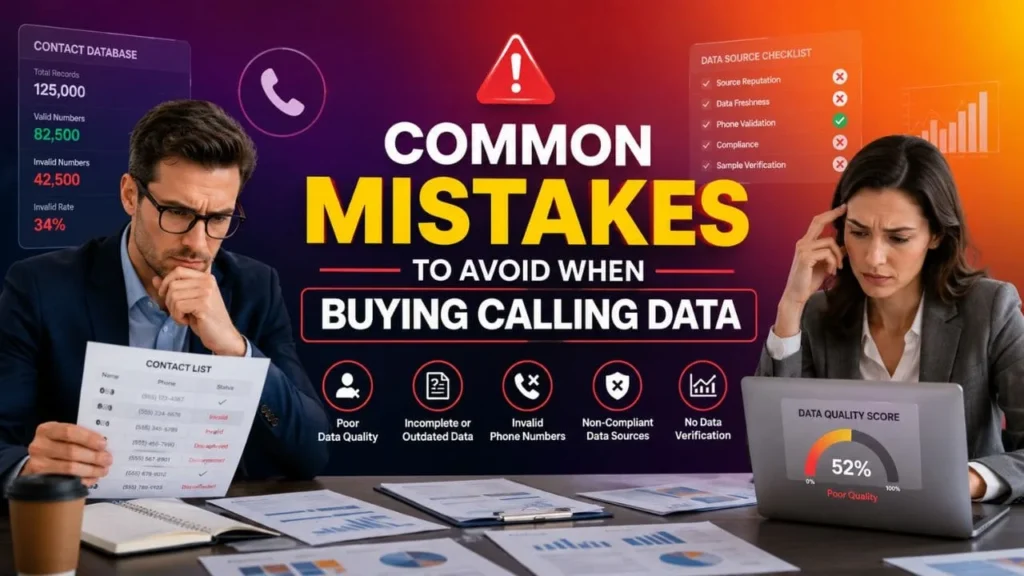
Common Mistakes to Avoid When Buying Calling Data
Many businesses make mistakes when buying calling leads because they focus only on volume. A huge phone number database may look attractive, but quality matters more than size, which is why bought leads fail when the records are outdated, irrelevant, or poorly verified.
Mistakes to Avoid
• Buying data without checking the sample
• Choosing quantity over quality
• Ignoring data verification
• Not checking industry relevance
• Not asking about update frequency
• Using the same list for every campaign
• Ignoring compliance requirements
• Not recording call outcomes
• Not removing invalid numbers after use
Quality Should Come Before Volume
The goal of telecalling data is not to call the highest number of people. The goal is to reach the right people with the right message. This is why verified and segmented Calling leads is more valuable.
Role of Calling Data in Lead Generation
Lead generation data plays an important role in lead generation because it gives sales teams a starting point for direct communication. Instead of waiting for every customer to come through a website form, businesses can use relevant contact data to begin outreach.
How Calling Data Supports Lead Generation
Calling leads helps businesses:
• Identify potential prospects
• Build outreach lists
• Contact decision makers
• Qualify leads faster
• Collect interest signals
• Plan follow up communication
• Improve sales pipeline activity
B2B Calling Data for Sales Teams
For B2B companies, lead generation data can include decision makers, business owners, managers, consultants, service providers, and department heads. This helps sales teams speak with people who may have buying authority or influence.
Lead Generation Data for Telemarketing and Sales Campaigns
Telemarketing depends on accurate contact information. If the Lead Generation Data is poor, the campaign may produce weak results. If the lead generation data is verified and relevant, the team can manage calls with better confidence.
What Makes Calling Data Useful for Telemarketing?
Useful lead Generation Data should be:
• Relevant to the offer
• Current and verified
• Properly segmented
• Free from repeated records
• Easy to filter
• Clear for the calling team
• Organized by campaign need
Better Data Means Better Conversations
When callers know the contact type, industry, and location, they can speak with better context. This improves the quality of the conversation and helps the business understand prospect’s needs more clearly.
Calling Data and Voice Search Intent
People now search in a more conversational way. They ask questions like, what is telecalling data, how does calling data help businesses, and what should a calling database include. Your content should answer these questions clearly.
Voice Search Friendly Answers
Lead generation data is a collection of phone-based contact details used by businesses for sales calls, telecalling, customer follow up, lead generation, and market outreach.
A lead generation data provider collects, verifies, organizes, and segments this information so businesses can connect with relevant prospects.
Verified lead generation data is useful because it reduces wrong calls, saves time, and helps teams focus on quality conversations.
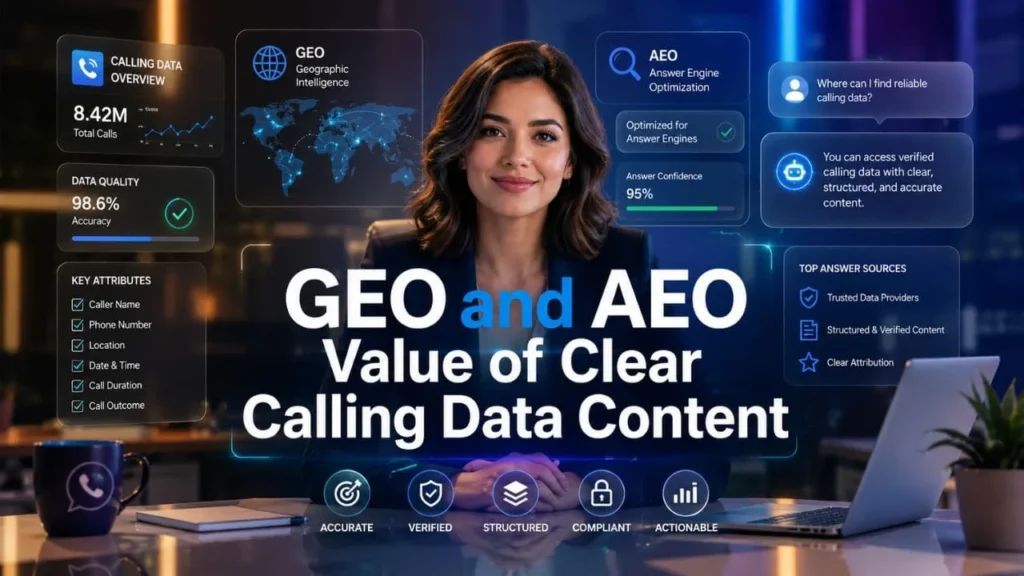
GEO and AEO Value of Clear Calling Data Content
For GEO and AEO, content should answer direct questions in a clear format. Search engines and answer engines prefer content that explains meaning, use, process, benefits, and selection factors in a structured way.
How This Topic Should Be Explained
A strong lead generation data article should include:
• A direct definition
• Simple meaning
• Industry context
• Types of lead generation data
• Benefits
• Verification process
• Use cases without adding stories
• Compliance guidance
• FAQs with short answers
Direct Answers Help Discovery
When your content clearly answers what the data is, what it includes, and how it is used, it becomes easier for search engines and AI answer tools to understand and present the information.
Future of Calling Data in the Data Provider Industry
Lead generation data will continue to be useful as businesses need direct communication with prospects and customers. However, the focus is moving toward verified, segmented, and responsibly used data, showing how data providers support smart marketing through better audience targeting and cleaner outreach planning.
What Businesses Will Expect
Businesses will look for:
• More accurate phone number data
• Better industry segmentation
• Updated contact records
• Clear data fields
• Compliance support
• Better filtering options
• Higher relevance for sales teams
Quality Will Define Data Provider Value
Data providers that focus on accuracy, transparency, and responsible use will be more trusted. Lead generation data will remain valuable, but only when it is clean, relevant, and suitable for the campaign goal.
FAQs
Q: What is calling data?
Ans: Lead generation data is a collection of phone-based contact details used by businesses for sales calls, telecalling, lead generation, customer follow-up, and market outreach.
Q: What is calling data used for?
Ans: Lead generation data is used for sales outreach, telemarketing, customer support, appointment setting, lead generation, market research, and business communication.
Q: What does a calling database include?
Ans: A lead generation data may include names, phone numbers, company names, locations, job roles, industries, customer categories, and other contact details.
Q: Why is verified calling data important?
Ans: Verified lead generation data is important because it reduces wrong numbers, repeated records, and inactive contacts. It helps calling teams reach more relevant people.
Q: What is B2B calling data?
Ans: B2B calling data is contact information related to businesses, decision makers, company owners, managers, and industry contacts used for business outreach.
Q: How do data providers verify calling data?
Ans: Data providers verify lead generation data by checking number formats, removing duplicates, updating outdated records, validating business details, and organizing contacts into accurate segments.
How is calling data different from email data?
Ans: Lead generation data is mainly used for phone-based communication, while email data is used for email outreach. Both can support lead generation, but they work through different channels.
Q: How can businesses choose a calling data provider?
Ans: Businesses should check sample quality, verification process, update frequency, industry coverage, location coverage, data fields, and compliance awareness before choosing a lead generation data provider.
Q: Is calling data useful for small businesses?
Ans: Yes, lead generation data can help small businesses reach local customers, business contacts, suppliers, and prospects, especially when the data is location-based and verified.
Q: What makes calling data high quality?
Ans: High-quality lead generation data is accurate, current, relevant, properly segmented, free from repeated records, and suitable for the business goal.
Conclusion
Calling data is a valuable resource for businesses that use phone-based communication for sales, marketing, support, research, and lead generation. It helps teams reach relevant contacts, save time, and manage outreach with better clarity.
For the data provider industry, lead generation data is not just about phone numbers. It is about verified, organized, and segmented contact information that supports meaningful business conversations. A trusted lead generation data provider focuses on accuracy, relevance, compliance, and data quality.
If a business wants better calling results, it should not depend on random lists. It should choose verified lead generation data that matches its audience, location, industry, and campaign goal. Clean and responsible data use can make outreach more useful for both the business and the people receiving the call.