
When businesses want faster growth, one question comes up again and again. Should you invest in SEO or PPC for better B2B lead generation results?
The answer is not as simple as choosing one channel and ignoring the other. SEO and PPC both support lead generation, but they do it in different ways. SEO helps you build steady visibility, attract organic traffic, and earn trust over time. PPC helps you appear in front of buyers quickly, reach decision-stage users, and test offers with speed.
If your goal is not just more clicks but more qualified enquiries, better conversion value, and stronger return from your budget, you need to look beyond traffic volume. Real ROI in B2B lead generation comes from lead quality, sales potential, customer value, and how well your strategy matches buyer intent.
This guide explains how SEO and PPC support lead generation, where each channel performs well, what their limits are, and how to choose the right path for your business.
Table of Contents
What B2B Lead Generation Really Means
Lead generation strategy for B2B is the process of attracting businesses that may need your product or service and guiding them toward action. That action may be a contact form submission, demo request, consultation booking, quote enquiry, or another step that shows buying interest.
In B2B marketing, the goal is rarely just traffic. You want relevant visitors who are more likely to become sales conversations and paying clients. A strong lead generation ROI strategy helps you focus on lead quality, conversion potential, and long term business value instead of simple traffic numbers.
Why lead quality matters more than lead volume
Many businesses make the mistake of looking only at how many leads they get. That can create a false picture of success. A campaign that brings fewer but better-matched leads may produce a stronger ROI than one that brings a high number of poor-fit enquiries.
Good lead generation should help you:
• Reach buyers with real intent
• Improve conversion quality
• Support sales with better prospects
• Reduce wasted spend
• Build a stronger marketing foundation
When you compare SEO vs PPC, this point matters a lot. One channel may produce faster traffic, while the other may create stronger long term value. What matters most is how those leads perform after the first click.
Metrics that matter in lead generation ROI
To judge ROI properly, you need more than impressions and visits. Look at:
• Cost per lead
• Conversion rate
• Lead to customer rate
• Customer acquisition cost
• Average deal value
• Sales cycle length
• Revenue from each source
• Overall pipeline contribution
These metrics help you see which channel is truly supporting business growth.
How SEO Supports B2B Lead Generation
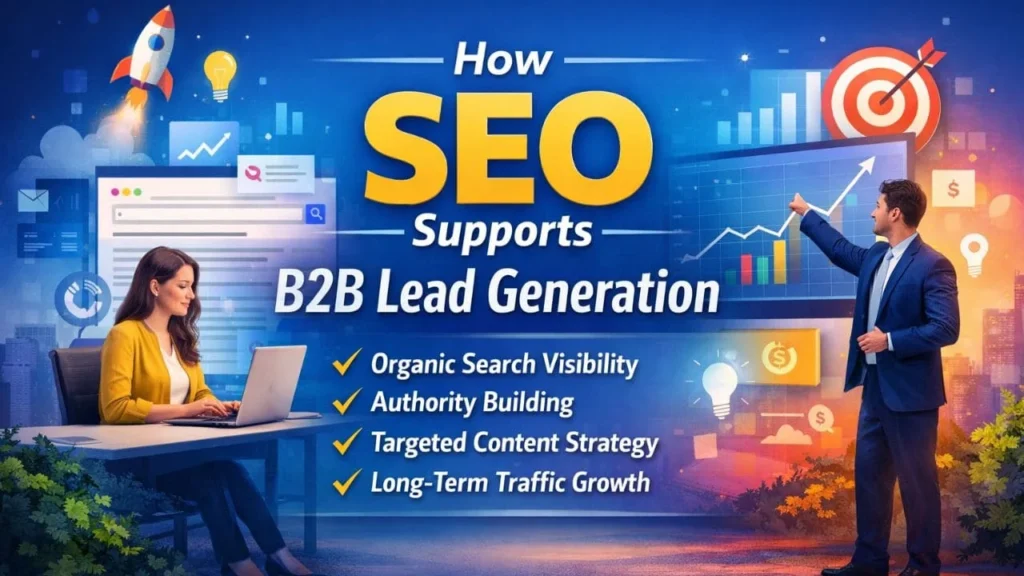
SEO helps your business appear in organic search results when people look for solutions, services, comparisons, and industry information. In B2B lead generation, this is valuable because buyers often research before they contact a company.
They read guides, compare options, search for pain points, and evaluate providers. SEO helps your content appear at those moments.
Why SEO works for lead generation
SEO supports lead generation by helping you capture search demand across the full buyer journey. A well planned SEO strategy can bring visitors from awareness stage queries, problem solving searches, and commercial intent searches.
This matters because B2B buyers often move slowly. They may not convert on the first visit, but useful content keeps your brand visible and relevant during research.
SEO can support:
• Organic visibility for service terms
• Trust through useful content
• Better discovery for problem based searches
• Consistent traffic without paying for every click
• Stronger brand authority over time
Benefits of SEO for B2B lead generation
SEO often delivers strong ROI when your business wants long term growth. Once content ranks well, it can continue bringing relevant traffic without ongoing ad charges for each visit.
Key benefits include:
• Better long term cost efficiency
• Stronger trust from organic visibility
• Broad keyword coverage across the buyer journey
• More value from educational and commercial content
• Better support for GEO, AEO, and voice search when content answers direct questions clearly
SEO also helps you build content assets that keep working over time. A strong service page, comparison page, FAQ section, and informative blog post can all support lead generation in different ways.
Limits of SEO
SEO is valuable, but it is not instant. It takes time to build rankings, authority, and steady traffic. In crowded B2B sectors, ranking for commercial terms may require a strong site structure, high quality content, relevant internal linking, and technical health.
SEO may be harder when:
• You need leads immediately
• Your website has weak authority
• Your content does not match search intent
• Your service pages are too thin or generic
• Your conversion path is unclear
SEO is powerful, but it usually rewards consistency rather than quick fixes.
How PPC Supports B2B Lead Generation
PPC gives your business immediate exposure in search results and other paid placements. This makes it useful when you want fast traffic, direct testing, and short term lead flow.
In B2B lead generation, PPC can help you reach people searching with clear buying intent. If the campaign is well structured and the landing page matches the search, PPC can produce quick and measurable results.
Why PPC works for lead generation
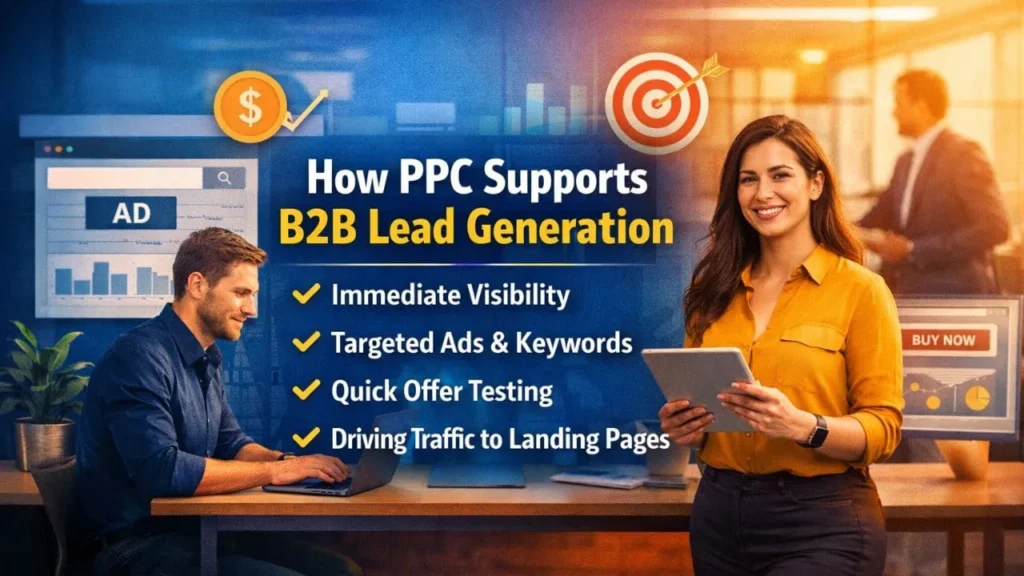
PPC works because it gives you control. You can choose keywords, location, audience, budget, and landing pages. You can also test offers quickly and measure results without waiting months.
This makes PPC useful for:
• Fast entry into competitive search results
• Immediate visibility for service terms
• Testing messaging and offers
• Driving traffic to focused landing pages
• Reaching high intent users at the right time
Benefits of PPC for B2B lead generation
PPC can be very effective when your business needs quick data and quick leads. It is especially useful for new campaigns, limited time offers, and bottom funnel intent.
Main benefits include:
• Faster results
• Easy testing of headlines and landing pages
• More control over targeting
• Clear budget management
• Useful performance data that can support wider lead generation strategy
PPC also helps you learn which queries convert best. That insight can improve your SEO content plan as well.
Limits of PPC
PPC has one major limit. Once the budget stops, visibility usually stops too. This means it may not deliver the same compounding value as SEO over time.
PPC can also become expensive if:
• Cost per click is high
• The landing page is weak
• The campaign targets broad or low intent terms
• Lead qualification is poor
• Tracking is incomplete
PPC can bring fast wins, but it needs discipline, relevance, and clear conversion thinking.
SEO vs PPC for B2B Lead Generation
SEO and PPC are often discussed as if one must replace the other. In reality, each serves a different role in lead generation.
| Keyword Type | Keywords to Use |
|---|---|
| Focus keyword | Lead Generation |
| Core topic keywords | SEO vs PPC, B2B lead generation, lead generation ROI |
| SEO angle keywords | SEO for lead generation, organic lead generation, long-term ROI, search intent |
| PPC angle keywords | PPC for lead generation, paid search, cost per click, fast lead acquisition |
| ROI keywords | cost per lead, customer acquisition cost, conversion rate, pipeline value |
| Decision-stage keywords | qualified leads, sales-ready leads, lead quality, buyer intent |
Which is better for speed
PPC is better for speed. If you need visibility now, paid campaigns can place your offer in front of potential buyers very quickly.
SEO takes more time, but that slower start can lead to stronger long term return if your content and pages continue to perform.
Which is better for lead quality
Lead quality depends on intent, messaging, and page alignment. SEO can attract very informed users who have already spent time researching. PPC can attract strong leads too, especially when the search query shows clear purchase intent.
The real question is not whether SEO or PPC always brings better leads. The real question is whether your channel and landing experience match what the user wants.
Which is better for ROI
This depends on time frame.
In the short term, PPC may show ROI faster because you can launch quickly and track direct conversions. In the long term, SEO often gives stronger cost efficiency because you are not paying for every visit.
If your business wants immediate demand, PPC may look stronger first. If your business wants durable lead generation growth, SEO often becomes more efficient over time.
When SEO Delivers Better ROI
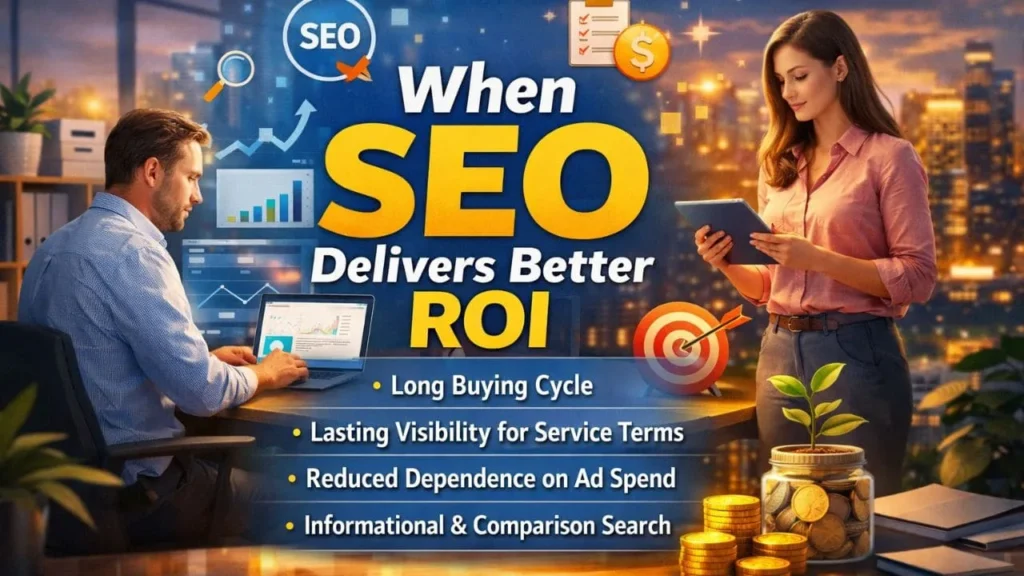
SEO often delivers better ROI when your service has a longer research cycle and buyers need time before they enquire.
SEO is often the better choice when:
• Your buyers ask many questions before contacting sales
• You want lasting visibility for service terms
• You want to reduce dependence on ad spend
• Your business has the patience to build content and authority
• You want to rank for informational, comparison, and commercial searches together
SEO is also useful when your website can support multiple content formats such as service pages, blog content, FAQs, and comparison pieces.
When PPC Delivers Better ROI
PPC often delivers better ROI when time matters more than long term build up.
PPC is often the better choice when:
• You need leads quickly
• You are launching a new offer
• You want fast keyword and message testing
• You already have strong landing pages
• You are targeting direct commercial intent searches
For some businesses, PPC helps fill the gap while SEO builds strength in the background.
Why a Combined Approach Often Works Best
For many B2B companies, the best answer is not SEO or PPC alone. It is a smart blend of both.
PPC can help you learn faster. SEO can help you grow more efficiently over time. PPC can test the language, offers, and queries that convert well. SEO can then use those insights to build stronger content and service pages.
A combined approach can support:
• Faster traffic from paid campaigns
• Long term organic growth
• Better use of search intent data
• Stronger brand visibility across the buyer journey
• More stable lead generation performance
This does not mean every business needs equal investment in both. It means the two channels can support each other when managed well.
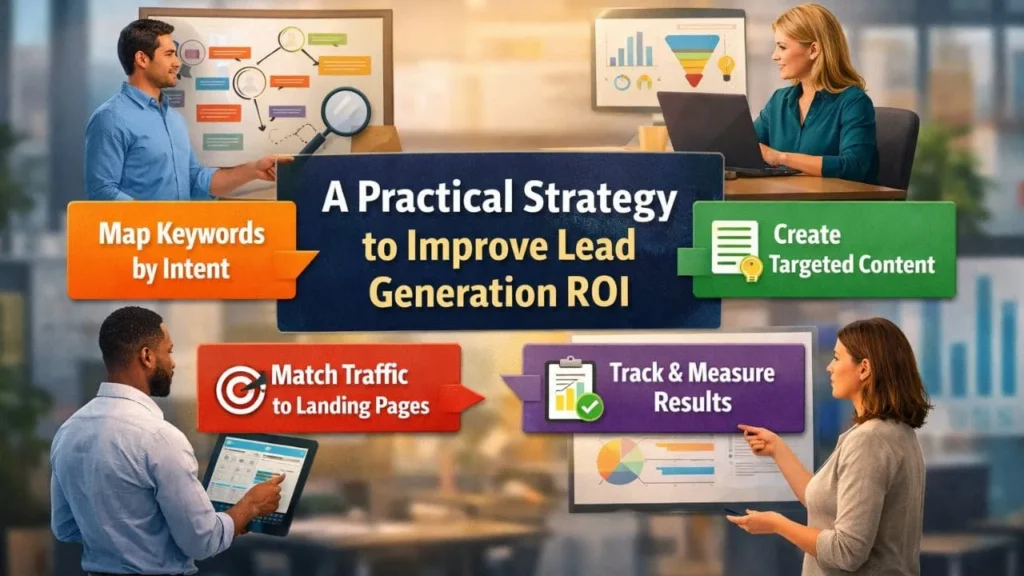
A Practical Strategy to Improve Lead Generation ROI
You do not Improve ROI with Qualified Leads by choosing a channel in isolation. You improve it by improving the system around the channel.
Map keywords to buyer intent
Not every search has the same value. Some users want basic information. Others want pricing, comparisons, or a provider.
Group your keywords into clear intent stages:
• Awareness stage
• Consideration stage
• Decision stage
This helps you decide which terms deserve SEO content, which deserve PPC campaigns, and which need both.
Build content for each stage
Strong B2B lead generation needs content across the full path to enquiry.
Use content such as:
• Educational blog posts for early research
• Comparison pages for evaluation
• Service pages for commercial intent
• FAQ content for direct answers
• Landing pages for focused conversion goals
This structure supports search engines, AI summaries, and voice search because it gives clear answers in the right format.
Match the landing page to the query
A common reason for poor ROI is mismatch. If the query shows buying intent but the page is too broad, conversions can suffer. If the query is educational but the page pushes a hard sales message too early, users may leave.
Make sure your content and landing pages reflect the user need behind the search.
Track the right performance signals
Do not stop at traffic and form fills. Review channel performance based on business value.
| Factor | SEO | PPC |
| Speed | Slower to build | Faster to launch |
| Cost model | Investment in content and optimization | Ongoing ad spend |
| Lead generation timeline | Medium to long term | Immediate to short term |
| ROI pattern | Compounding over time | Often strongest early when campaigns are optimized |
| Trust factor | Strong for organic discovery | Strong when paired with relevant offer and proof |
| Best use case | Sustainable lead generation | Fast testing and quick demand capture |
Common Mistakes That Hurt Lead Generation ROI
Many businesses lose return not because SEO or PPC failed, but because execution was weak.
Watch out for these mistakes:
• Focusing only on traffic volume
• Ignoring lead quality
• Sending paid traffic to poor landing pages
• Writing SEO content without clear intent match
• Forgetting FAQs and direct answers for AEO and voice search
• Tracking leads but not revenue contribution
• Treating SEO and PPC as isolated activities
When you avoid these mistakes, your lead generation strategy becomes more efficient and easier to improve.
Final Thoughts
So, which delivers better ROI for B2B lead generation, SEO or PPC?
The honest answer is that ROI depends on your goals, timing, offer, budget, and sales process. PPC is stronger when you need quick visibility and fast testing. SEO is stronger when you want durable visibility, trusted discovery, and better cost efficiency over time. This is also why many businesses now accept that SEO is the Biggest Traffic in 2026 when the goal is to build lasting search presence and steady lead flow.
If your business wants a stable and scalable lead generation strategy, it helps to stop thinking in simple channel battles. Instead, focus on intent, page relevance, conversion quality, and measurement. That is where stronger ROI is built.
The best strategy is usually the one that brings the right visitors, answers their questions clearly, and moves them toward action with the least waste.
FAQ
Q: Is SEO better than PPC for B2B lead generation?
Ans: SEO is often better for long term lead generation because it can keep bringing relevant traffic without a cost on every click. PPC is often better when you need leads quickly.
Q: Does PPC deliver faster ROI than SEO?
Ans: Yes, PPC can deliver faster results because campaigns can go live quickly. SEO usually takes more time, but it can become more efficient in the long run.
Q: Which channel brings better quality leads?
Ans: Both can bring quality leads when the search intent, message, and landing page are aligned. Lead quality depends more on relevance than on channel alone.
Q: Should B2B companies use SEO and PPC together?
Ans: In many cases, yes. PPC can test offers and keywords quickly, while SEO builds lasting visibility and supports broader lead generation growth.
Q: How do I measure lead generation ROI correctly?
Ans: Track cost per lead, conversion rate, customer acquisition cost, pipeline value, and close rate. These metrics show real business impact better than traffic alone.
Q: What is the best long term strategy for lead generation?
Ans: The best long term strategy usually combines strong SEO content, focused service pages, useful FAQs, and smart PPC support for high intent opportunities.