
Buyer intent data gives you a clearer view of who is searching, comparing, and moving closer to a purchase. It helps you separate serious prospects from low-value traffic. That shift matters because a strong B2B lead pipeline depends on relevance, timing, and fit, and it plays a key role in shaping an effective lead generation strategy.
When you rely on broad lists or random outreach, you spend time on contacts who have no real interest. Your sales team works harder for weaker results. Your marketing team sends messages with little response. Buyer intent data changes that. It shows what your audience reads, searches, visits, and compares before they speak to sales.
For your blog, this topic works well because it speaks to a real pain point. Most companies want better lead quality, not more names. That is where buyer intent data creates value. It helps you identify buyers who already show signs of need, urgency, or active research. It supports sharper targeting, better messaging, and stronger conversion rates.
Table of Contents
What Buyer Intent Data Means
Buyer intent data is information that reveals buying interest. It shows which topics, products, or services a prospect explores before making a choice. In simple terms, it helps you understand what your audience wants and where they stand in the buying journey. When combined with AI-driven lead generation, this data becomes more actionable by identifying patterns and predicting which prospects are more likely to convert.
There are two main types of intent data.
First party intent data
This comes from your own channels.
• Website visits
• Blog views
• Form fills
• Product page visits
• Email clicks
• Demo requests
• Content downloads
Third-party intent data
This comes from outside sources that track research behavior across the web.
• Topic searches
• Content consumption on industry sites
• Comparison activity
• Review site visits
• Competitor research signals
Both types help you build a clearer picture of a B2B lead. First-party data shows what people do on your own properties. Third party data shows what they do before they reach you.
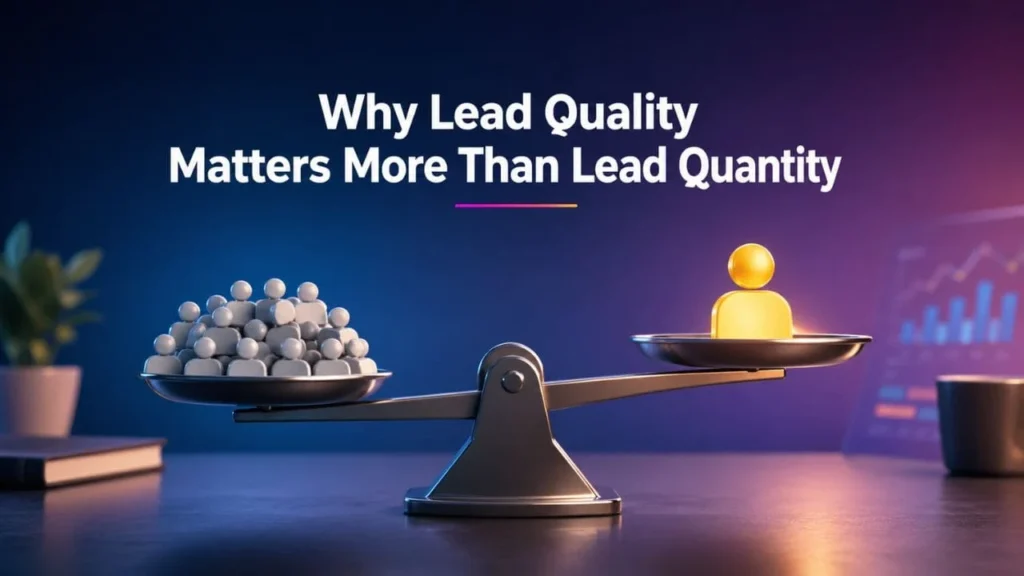
Why Lead Quality Matters More Than Lead Quantity
Many teams chase volume first. They fill the funnel with names, then hope the numbers work out. That approach creates noise. It wastes budget. It slows sales follow-up. It also reduces trust between teams when results miss the target.
Lead quality changes the outcome.
A high-quality B2B lead gives you:
• Better fit with your offer
• Stronger buying interest
• Faster sales movement
• Better response rates
• Less wasted outreach
Poor quality leads create the opposite. They raise costs, stretch sales effort, and lower return on marketing spend. This also weakens your call center lead generation efforts by filling pipelines with low-intent contacts. When you improve lead quality, every stage after that becomes easier.
How Buyer Intent Data Improves B2B Lead Quality
Buyer intent data improves lead quality by showing who is active in the market right now, which supports more precise BPO lead generation. That detail helps you work with better timing and stronger relevance.
It reveals active buyers
You stop guessing who might be interested. You focus on people who already show signs of research and intent. That makes your outreach more useful and your messages more timely.
It sharpens segmentation
You group contacts by behavior, topic, and stage. A B2B lead that reads service comparison content needs a different message from one who only visits a general homepage. Intent data helps you make that difference.
It improves scoring
Traditional lead scoring often gives too much weight to basic form fills or job titles. Intent data adds behavior signals, so you score leads with better context. A contact who visits pricing pages three times deserves more attention than one who downloads a broad report once.
It improves sales handoff
Sales teams work better when they receive context. Intent data tells them what the lead reviewed, what topic drew attention, and where the interest lies. That lets them speak with more relevance from the first touch.
It reduces wasted outreach
When you know who is not ready, you avoid pushing sales too early. When you know who is active, you move faster. That balance protects time and improves results.
Key Benefits for Your B2B Lead Strategy
Buyer intent data gives your lead strategy practical gains when supported by a high-quality data provider. The value shows up in planning, targeting, and follow-up.
Better message match
You reach people with content tied to their interests. That improves relevance and response.
Higher conversion potential
A B2B lead with clear buying signals is more likely to move into deeper engagement.
Stronger marketing and sales alignment
Both teams work from the same behavioral signals. That reduces confusion and improves handoff quality.
More efficient budget use
You spend more on the contacts who show intent and less on broad, unfocused activity.
Shorter path to action
People who already research your category move faster when your message matches their needs.
Intent Signals You Should Track
Not every signal carries the same weight. Some show light curiosity. Others show strong purchase intent.
High value signals
• Pricing page visits
• Competitor comparison searches
• Demo requests
• Contact page visits
• Product feature views
• Repeat visits within a short time
• Downloading solution-focused content
Medium value signals
• Blog reads on relevant topics
• Webinar registration
• Email link clicks
• Time spent on service pages
• Return visits to key pages
Lower value signals
• Single-page visits
• Very short sessions
• General news reads
• Broad topic browsing
A strong B2B lead strategy gives more weight to high-value signals. That keeps your pipeline focused on prospects with stronger purchase intent.
Practical Strategies to Improve B2B Lead Quality
Buyer intent data works best when your process is clear. The data itself does not create results. Your use of it creates results.
Segment by behavior
Group contacts based on what they do, not only who they are. Role, industry, and company size matter. Behavior matters too. A decision maker with strong intent deserves faster attention than a contact with no active interest.
Match content to the intent stage
Someone in early research needs education. Someone comparing options needs proof and clarity. Someone nearing a purchase needs details, pricing context, and next step guidance.
Refine lead scoring
Assign a stronger value to signals tied to buying activity. Reduce the weight of shallow activity. That improves the quality of your B2B lead scoring model.
Align sales follow-up with timing
Fast response matters when intent rises. If someone shows a strong interest, follow up while attention remains high. Delay lowers the chance of conversion.
Use CRM data with intent data
Your CRM holds contact details, company data, and history. Intent data adds behavior. Together, they give a fuller picture and support better action.
Update targeting rules often
Buyer interest changes. Review signal patterns often. Remove stale records. Re-score active accounts. Keep your routing clean and current.
Traditional Lead Approach vs. Intent-Based Approach
| Factor | Traditional Approach | Intent-Based Approach |
|---|---|---|
| Targeting | Broad | Behavior-based |
| Conversion Rate | Low | Higher |
| Sales Effort | High | Focused |
| Lead Relevance | Uncertain | High |
| Cost Efficiency | Poor | Better |
This table shows the main shift. Intent data moves your process from broad outreach to informed action. That is a better path for any B2B lead program.
Buyer Intent Strategy and Outcome
| Factor | Traditional Approach | Intent-Based Approach |
|---|---|---|
| Targeting | Broad | Behavior-based |
| Conversion Rate | Low | Higher |
| Sales Effort | High | Focused |
| Lead Relevance | Uncertain | High |
| Cost Efficiency | Poor | Better |
How to Use Buyer Intent Data in Your Lead Process
If you want stronger results, build the process in steps. Keep it simple and measurable.
Step 1. Collect relevant data
Use website activity, form activity, email behavior, and third-party intent signals. Focus on useful sources, not noise.
Step 2. Clean and check the data
Remove duplicates. Review stale records. Confirm company names, contact fields, and activity patterns. Better data gives better action.
Step 3. Assign scores by buying value
Give more weight to high-intent behavior. Less weight to low-interest activity. This keeps your B2B lead list accurate.
Step 4. The route leads to the right team
High intent leads need fast sales follow-up. Early-stage leads need nurturing. Match the contact to the correct path.
Step 5. Review and improve often
Track reply rates, meeting rates, and close rates. Adjust scoring and routing when the data shows weak spots.
Common Mistakes to Avoid
Many teams collect intent signals but still miss the result. Often the problem sits in execution.
• Using too many weak signals
• Ignoring data quality
• Sending the same message to every lead
• Failing to update scoring rules
• Delaying follow-up after strong intent
• Separating marketing and sales work
Avoid these mistakes and your B2B lead quality improves faster.
SEO, GEO, AEO, and Voice Search Value
This topic supports search visibility because readers ask direct, specific questions. Clear headings help search engines and AI systems understand the page quickly. Short answers also help voice search results surface the right content. It also aligns with how a B2B data provider structures content around user intent and search behavior.
To strengthen that performance, keep the page focused on one main idea. Use simple language. Answer common questions directly. Place the focus keyword in the title, opening section, a few headings, and selected body sections. That gives the page relevance without forcing repetition.
FAQ
What is buyer intent data in B2B marketing?
Buyer intent data is behavior-based information that shows interest in a product, service, or topic. It helps you see which contacts are closer to buying.
How does buyer intent data improve B2B lead quality?
It helps you focus on prospects who already show active research. That improves targeting, scoring, and follow-up.
Why is lead quality more useful than lead quantity?
Lead quality gives you a better fit, better response, and better conversion potential. Lead quantity without intent often creates wasted effort.
Which intent signals matter most?
Pricing page visits, product page views, competitor comparisons, repeat visits, and demo requests usually carry strong value.
How do you use intent data with a CRM?
You connect behavior data with contact and account records. That gives sales and marketing a fuller view of each B2B lead.
Does buyer intent data work for every industry?
Yes, when the signals match the buying process. The source and scoring model should fit your market and sales cycle.
How often should you review intent data?
Review it often. Buyer behavior changes fast. Fresh data support better outreach and better timing.
Conclusion
Buyer intent data gives you a smarter way to build lead quality. It helps you spot active buyers, score them more accurately, and guide them with the right message at the right time. That leads to better sales follow-up and stronger pipeline results.
For a B2B lead strategy, the value is clear. You reach people with real interest. You waste less time on weak signals. You improve the path from first touch to conversion. When you use intent data with a clean process and clear scoring, your lead quality rises in a measurable way.