
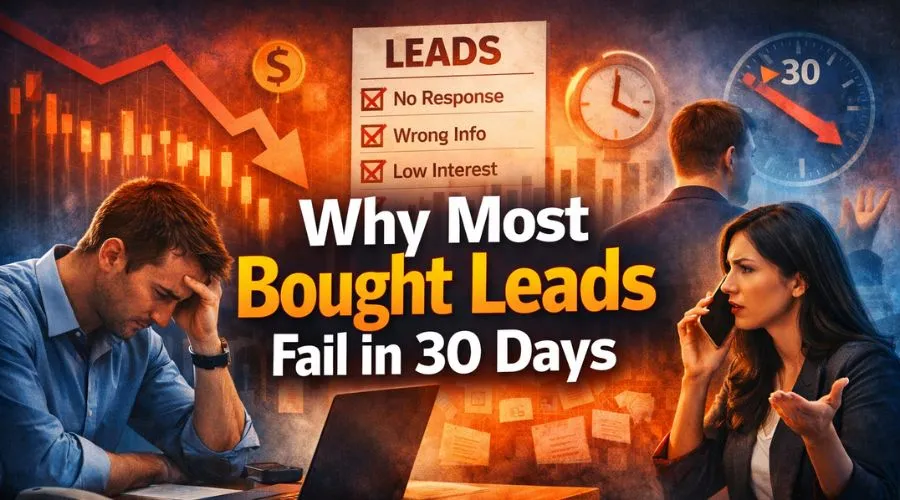
Many teams buy leads because they want speed. They want more conversations, more meetings, and a faster path to revenue. The problem is that when bought leads fail, they often fail for reasons that were already present before the first call or email. Weak intent, poor fit, stale data, and weak qualification can drag results down almost at once. TechSupportLeads itself notes that third party data can help with scale, but outdated or poorly matched records can reduce efficiency and lead quality, which is why reliable lead generation services matter more than raw volume.
Here is the short answer. Bought leads usually fail in 30 days because the list looks larger than the real opportunity behind it. If the contact data is old, the buyer is not ready, the offer does not match the need, or the same lead is passed to several sellers, your response rate drops, your meetings thin out, and your sales team starts chasing names instead of real demand.
That does not mean every purchased list is useless. It means you need to judge lead quality with more discipline. Volume can look good on a spreadsheet and still perform badly in the market. What matters is whether the lead fits your buyer, shows real interest, and enters your pipeline at the right time as part of a stronger lead generation strategy.
Table of Contents
Why bought leads fail so fast?
What goes wrong in the first week?
The first week tells you more than most teams realize. If contact rates are weak, replies are vague, or calls reach people who do not remember the inquiry, the list has a quality problem. In many cases, the issue is not your sales script. The issue is that the lead never had enough buying intent or enough context to begin with.
When bought leads fail early, the pattern is usually simple. Your team spends time on outreach, but the list does not produce steady engagement. That creates pressure to send more emails, make more calls, and push harder on the wrong audience. Instead of building momentum, your team burns time trying to rescue weak inputs.
| Problem | What it looks like | Business impact |
|---|---|---|
| Low buyer intent | Leads respond but do not move forward | Low conversion rate |
| Shared distribution | Same lead contacted by many sellers | More competition and price shopping |
| Outdated data | Invalid numbers or inactive emails | Lower contact rate |
| Poor ICP match | Wrong industry, size, or need | Wasted sales effort |
| Weak qualification | Leads were never screened properly | Poor lead to customer ratio |
Why does intent matter more than volume?
Intent matters because lead count alone does not tell you whether a person or company is ready to act. A large list can still be full of people who are only curious, only researching, or not thinking about a purchase right now. Buyer intent data exists for a reason. It helps separate casual interest from real buying movement.
If you focus only on volume, you can mistake activity for progress. Opens, clicks, and answered calls may look busy, but they do not mean the lead will move toward revenue. When bought leads fail, one common reason is that businesses bought names when they actually needed signals of timing, need, and fit.
Why does data freshness decide early results?
Fresh data gives your team a fair chance. Old data does not. If contact details are outdated, company roles have changed, or the record no longer reflects a current need, the campaign starts from a weaker position. TechSupportLeads recently explained that third party data often needs stronger validation because relevance and accuracy can slip.
Data freshness also affects trust. When your first message feels disconnected from what the prospect actually needs now, the response often goes cold. That is another reason bought leads fail within 30 days. The list may not be fake, but it may no longer reflect a live buying moment.
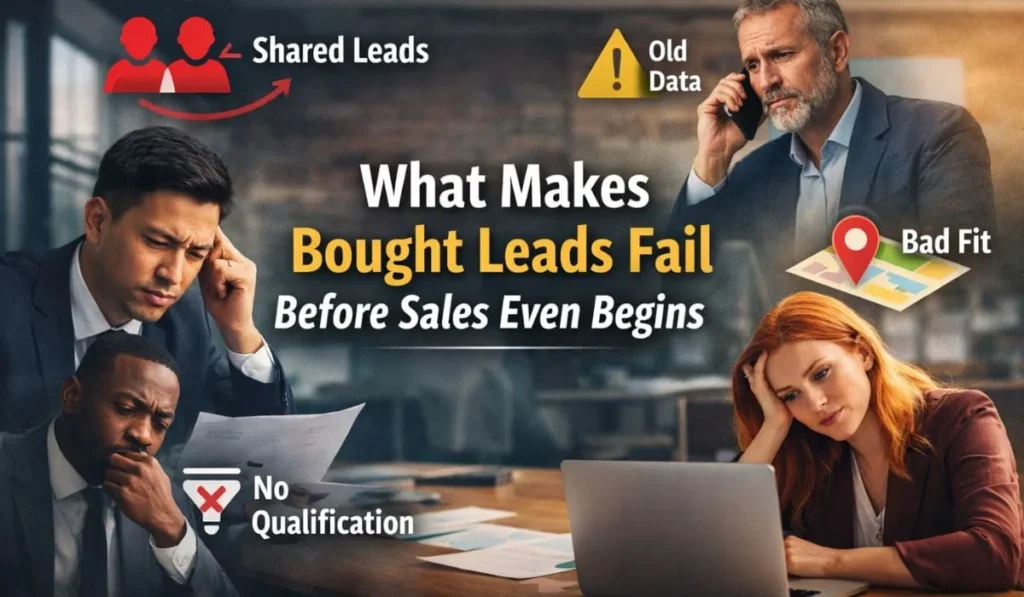
What makes bought leads fail before sales even begins?
Are shared leads part of the problem?
Shared leads can create instant competition. If several sellers contact the same person around the same time, the buyer often shifts into comparison mode. That makes it harder to build trust, harder to stand out, and easier for the conversation to become about price alone. This is also where first party vs third party data becomes important, since the source and quality of the lead can directly affect how ready that buyer is to engage.
This does not mean shared leads never work. It means the margin for error gets smaller. If your team is slow to respond or the offer is not clearly different, someone else can reach the lead first and shape the decision before you do. That is one more reason bought leads fail even when the list appears active.
| Lead type | Typical strength | Typical weakness | Best fit |
| Shared leads | Lower upfront cost | More competition and lower response quality | Teams testing volume carefully |
| Exclusive leads | Better control and less competition | Higher cost per lead | Teams focused on quality and speed |
| First party inbound leads | Stronger intent and better context | Slower to build consistently | Long term growth strategy |
| Poorly sourced third party leads | Fast to buy | Weak fit and weaker conversion | Usually high risk |
Does the list match your ideal buyer?
A lead is not useful just because the contact details are valid. It also needs to fit your market. Industry, company size, geography, service need, and budget all matter. If the list misses those filters, the sales team ends up working through noise rather than real opportunity.
This is where many purchased campaigns break down. Businesses buy broad reach when they actually need close relevance. A list can be accurate and still be wrong for you. When bought leads fail, mismatch is often hiding behind the word volume.
Was the lead qualified before delivery?
Qualification is the line between raw data and sales potential. If a vendor cannot explain how records were checked, how freshness was confirmed, and what standards were used to screen for fit, you are buying uncertainty. That uncertainty shows up later as weak response, poor meeting quality, and low close rates.
Before you commit budget, ask whether the list was filtered for current need, role relevance, and contact accuracy. If the answer is vague, that is a warning sign. Bought leads fail more often when the data vendor sells reach but not real qualification.
Why bought leads fail inside the sales process?
Can faster follow up save a weak list?
Fast follow up helps, but it cannot turn a poor list into a strong one. If the person was never a good fit, was never ready, or was already contacted by others, speed alone will not solve the deeper problem. It may help you reach the lead before someone else does, but it will not create demand that was never there.
That is why bought leads fail even under hard working sales teams. We sometimes assume better effort will fix weak inputs. In reality, effort works best when the source quality is already solid. Sales can improve conversion, but sales should not have to invent buyer intent from scratch. This is also why choosing between in house and outsourced lead generation should depend on lead quality, not just speed or volume.
Why do bad leads confuse your metrics?
Bad leads make reporting look fuller than it really is. You may see more contacts in the CRM, more activity from the sales team, and more top of funnel movement. Yet revenue stays flat because the added volume does not produce qualified conversations. ActiveProspect points out that measuring lead quality matters because it helps teams spot low intent traffic, align spend with profitable sources, and improve decisions with real outcomes instead of guesswork.
This is one of the most costly ways bought leads fail. The list does not only miss revenue. It also distorts performance signals. Marketing may believe it delivered enough. Sales may believe the market is weak. Leadership may believe the offer needs to change. In truth, the main issue may be source quality from the start.
Why do teams keep buying more of the same problem?
They do it because more names can feel like progress. When pressure rises, buying another batch looks faster than fixing qualification standards, source checks, and measurement rules. But if the same issues remain, the next batch often repeats the same pattern.
Teams also repeat the problem when they track cost per lead more closely than cost per opportunity or cost per customer. A cheap list can become expensive if it absorbs sales time and produces very little pipeline. Bought leads fail most often when price is judged before fit, freshness, and intent.
How can you stop the reasons bought leads fail?
What should you ask a vendor before you buy?
Ask simple questions and push for clear answers.
- Where did the data come from
- How recent is it
- Is the list shared or exclusive
- How was fit checked
- What happens if records are wrong or inactive
These questions matter because they reveal whether the vendor is selling quality or only scale. TechSupportLeads has already published guidance on choosing the right leads vendor and on the difference between first party and third party data, which makes this a natural standard for buyers to apply.
Which warning signs should make you pause?
Watch for warning signs before you spend more.
- The vendor promises huge volume with little detail
- The source is unclear
- Qualification rules are vague
- Freshness checks are not explained
- The pricing feels low because the risk is shifted to you
When bought leads fail, these signs are often visible at the buying stage. They look small in the moment, but they become expensive after the list reaches your team.
What should you measure in the first 30 days?
Measure what moves revenue, not just what fills the funnel. In the first 30 days, track response rate, meeting rate, qualified opportunity rate, and source level close rate. Those numbers tell you whether the list belongs in your system.
Keep the review simple. Ask four questions. Are we reaching the right people? Are they replying with real interest? Are they progressing into sales conversations? Are they turning into pipeline? If the answer keeps weakening at each step, bought leads fail because the source was weak, not because the team forgot how to sell.

What should you do instead when bought leads fail?
Build around first party signals
First party signals usually give you better context because they come from direct interaction with your brand. A visitor who fills a form, returns to your site, views service pages, or asks for pricing is giving you information that is closer to real interest. That is why TechSupportLeads describes first party data as a stronger foundation, while third party data works better as a support layer when it is validated carefully and reviewed through a process like how to verify B2B data before buying.
If your current lead mix leans too heavily on purchased records, shift some effort toward owned demand. SEO, paid search, helpful service pages, and clear lead forms can give your team better inputs over time. Bought leads fail less often when they are supporting a stronger first party system instead of replacing it.
Use purchased data as a support layer
Purchased data still has a place when you use it with discipline. It can help you test a market, expand reach, or enrich your view of possible buyers. But it works best when you validate it, segment it tightly, and connect it to signals from your own channels.
Think smaller and cleaner. A shorter list with better fit can outperform a large list with weak intent. That is a better path when bought leads fail, because it focuses your spend on records your team can actually work.
Choose a smaller cleaner path to growth
If this pattern feels familiar, do not answer it with more volume. Review your source, your qualification rules, your timing signals, and your first 30 day measurements. Then buy less, validate more, and keep only what produces real opportunity.
If you want better results from lead buying, start with a tighter process instead of a bigger list. Review your current source quality, check how well the records match your buyer, and test with a smaller verified batch before you scale. That simple shift can protect your budget and give your sales team a fairer chance to convert.
FAQ
Q:Why do bought leads fail within 30 days?
Ans: Bought leads fail within 30 days because the underlying quality issues show up fast. Weak intent, stale contact data, poor fit, and shared distribution can reduce replies, meetings, and pipeline before the month is over.
Q: Are bought leads always a bad idea?
Ans: No. Bought leads can still help when the source is transparent, the records are fresh, the fit is close, and the list is tested before scale. The problem is not the act of buying. The problem is buying without enough validation.
Q: What is the biggest reason bought leads fail?
Ans: The biggest reason bought leads fail is weak buyer intent combined with weak qualification. A contact may be real, but if the person is not ready, not relevant, or not matched to your offer, conversion stays weak.
Q: Is first party data better than third party data?
Ans: First party data is usually stronger because it comes from direct interaction with your brand. Third party data can still be useful, but it often needs more validation to protect relevance, freshness, and trust.
Q: What should we track after buying a list?
Ans: Track response rate, meeting rate, qualified opportunities, and source level closes. These measures show whether the list is building pipeline or only adding activity.
Q: How can we improve results from purchased leads?
Ans: Improve results by tightening your filters, checking freshness, asking vendors better questions, and combining purchased data with stronger first party demand signals. Buy less, verify more, and keep what proves it can move into real sales conversations.